
The General Impact of AI on Business: AI Use Cases by Department
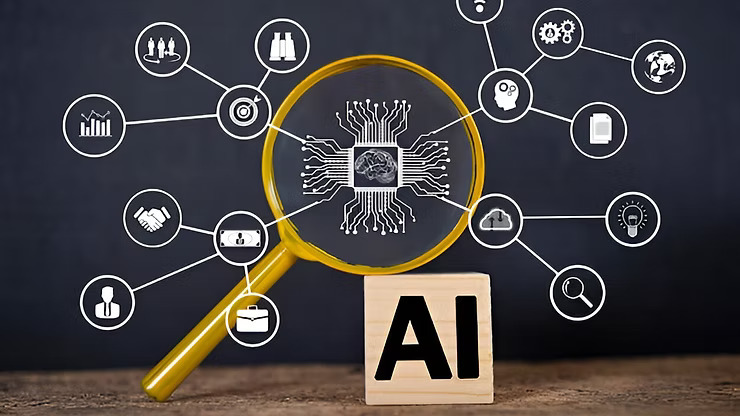
Artificial Intelligence (AI) is no longer just a futuristic concept; it’s rapidly transforming how businesses operate, grow, and compete. Companies of all sizes are embracing AI to enhance productivity, improve decision-making, and maintain a competitive edge. This change is not limited to large enterprises. Small and medium-sized businesses are now leveraging AI for growth, thanks to user-friendly and cost-effective tools. Every business area—from customer service to finance—benefits from smart automation and data-driven insights, showcasing the diverse AI use cases by department.
How AI Is Revolutionizing Business Operations
So, how is AI enhancing business functions? It’s automating repetitive tasks, allowing teams to focus on more strategic work. From customer support to sales follow-ups, AI is making these processes faster, smarter, and more accurate. For example, AI can automate email replies, analyze financial data, and manage team tasks, providing measurable benefits.
AI-powered solutions are also enhancing customer experiences. Tools like live chat, chatbots, and inquiry automation help teams interact more effectively with clients. In marketing, AI generates content, schedules posts, and analyzes industry trends. Sales teams are benefiting from lead scoring and follow-up automation, while finance departments streamline invoicing and expense tracking. Project managers leverage AI to prioritize tasks, manage calendars, and automate workflows.
Why Embrace AI in Business
AI is transforming business operations from the ground up. If you’re curious about how to start, follow these simple steps:
Start Small: Choose a process to automate.
Measure Results: Assess the effectiveness of your automation.
Scale: Once successful, scale your approach for greater impact.
Successful companies are wisely embracing AI today, paving the way for future innovations.

AI in Marketing and Sales: Start Small, Scale Smart
Artificial Intelligence is reshaping how marketing and sales teams operate—enabling them to understand customer behavior and automate lead follow-ups. Whether managing a small business or a large enterprise campaign, AI marketing tools are helping teams become more efficient and effective.
1. How AI Is Reshaping Marketing Strategies
The era of generic marketing campaigns is over. AI allows for data-driven decisions and hyper-personalized communication.
AI marketing tools like Jasper and Copy.ai quickly generate email copy, blog outlines, and social media content.
AI data analysis tools identify buyer behavior, enabling marketers to segment audiences and predict which offers will convert best.
AI advertising tools optimize ad placements by analyzing user engagement and cost-efficiency in real-time.
2. Targeted Campaigns Made Easy
AI removes the guesswork from campaigns. It helps teams test, learn, and adapt effortlessly—often on autopilot.
AI email marketing tools like Mailchimp and Brevo recommend optimal send times, effective subject lines, and even adjust tone based on audience data.
Keyword research tools like SEMrush AI modules provide comprehensive analysis of audience search behaviors.
Content writing automation ensures consistency across blogs, landing pages, and ads, significantly reducing production time.
3. Sales Teams Sell Smarter
AI enhances marketing and accelerates your sales processes.
AI for sales qualifies leads instantly, reducing wasted time on unsuitable prospects.
Sales automation software like HubSpot AI manages follow-ups and CRM updates with minimal human input.
AI lead scoring tools assess user intent, prioritizing outreach according to the likelihood of converting.
Customer data analysis tools furnish sales reps with a comprehensive understanding, enabling personalized pitches without delving through spreadsheets.
4. AI in Action: From Strategy to Sale
For those beginning to explore AI, automate one segment of your sales funnel:
Use AI tools for follow-up emails to keep warm leads engaged.
Test automated email replies for frequently asked questions.
Implement live chat AI solutions to interact with website visitors in real-time.
With AI, marketing and sales processes are no longer reliant on guesswork. They’re enhanced by valuable insights and automation, giving businesses an edge in competitiveness. Begin small, track outcomes, and scale with confidence.
AI in Customer Service: Smarter Support with Chatbots and Automation
Customer service has transformed in the AI era. Long hold times, robotic scripts, and ticket queues are becoming relics of the past. Today’s AI in customer service is about delivering instant help, personalizing interactions, and implementing smart automation that operates around the clock.
1. Why Businesses Are Turning to AI for Customer Support
As customer expectations escalate, effective and swift responses become paramount. Enter AI customer service tools, which assist teams in managing increased query volume efficiently while preserving accuracy and satisfaction.
Key advantages include:
Speedy responses thanks to AI chatbots for customer support
24/7 support via automated help desks
Consistency in replies across various channels
Reduced support costs without sacrificing quality
Enhanced insights into customer behaviors and needs
2. Real Use Cases: Chatbots and Automation in Action
AI-powered chatbots are now standard in support suites, capable of resolving issues in real time, not just answering FAQs.
Common applications include:
Automated email replies for inquiries like “Where’s my order?” or “How do I reset my password?”
Customer inquiry automation that directs tickets to the appropriate departments immediately
Live chat AI solutions guiding users through troubleshooting processes or product selections
Personalized product suggestions based on browsing history or past purchases
3. Integrating AI into Your Help Desk
No need for a complete system overhaul to utilize AI. Many businesses start incrementally by adding a chat functionality or a smart reply system. Platforms such as Zendesk, Intercom, and Freshdesk offer AI-powered customer service features built directly within.
Consider these possibilities:
Automated help desks designed for high-volume user inquiries
AI customer service tools that assess sentiment and prioritize urgent requests
Customer behavior analytics enabling a deeper understanding of user pain points and enhancing response effectiveness
AI tools for follow-up emails that help re-engage customers post-resolution or check in on their satisfaction
Final Thoughts: AI Means Better Customer Experiences
The true strength of AI for customer support lies in its ability to enhance the customer experience at scale. Whether running a small enterprise or managing a large support team, AI enables businesses to serve a wider audience—more efficiently, accurately, and thoughtfully.
Ready to elevate your customer service? Begin by automating just one task in your workflow. The results may pleasantly surprise you.
AI in Human Resources: Smarter Hiring, Better People Management
The role of AI in Human Resources is expanding rapidly. Companies are no longer solely relying on manual approaches; they are turning to intelligent tools that streamline hiring, improve employee management, and tailor training programs. Let’s discover how AI is transforming HR functions across all levels.
1. AI-Driven Talent Management
AI for recruitment has significantly shortened time-to-hire while reducing bias. These tools scan thousands of resumes in seconds, shortlisting candidates based on the necessary skills, job fit, and organizational culture.
How businesses utilize AI in hiring includes:
Resume screening bots that prioritize qualified applicants
Chatbots that manage initial candidate inquiries and scheduling
AI tools that interpret behavioral data for better role alignment
With HR automation AI, HR teams can devote more time to strategic decision-making and enhancing employee experiences, moving away from mundane administrative chores.
2. Predictive Analytics for Employee Management
AI solutions for employee management utilize data to proactively optimize team productivity and engagement. Predictive analytics can uncover patterns in attendance, performance, and attrition risks before they become problematic.
Examples include:
Real-time dashboards to track performance KPIs
Alerts for potential burnout or disengagement
Data-driven suggestions for promotions or departmental transitions
This shift leads to better planning, higher retention, and greater internal mobility.
3. AI for Training and Development
Training has evolved from a one-size-fits-all strategy to personalized learning experiences. AI for training staff allows organizations to create tailored learning pathways that adjust according to individual pace and capabilities.
How companies apply AI in training:
Custom learning modules tailored to employee roles and skill gaps
Automated quizzes, simulations, and assessments
Real-time progress tracking combined with AI-generated feedback
This ensures that each employee receives the support necessary for their development—whether during onboarding or upskilling.
Why It Matters
Incorporating AI into daily HR operations allows businesses to:
Cut down hiring expenses
Boost employee satisfaction
Make more informed, timely personnel decisions
From AI in recruitment to employee management AI, the current tools available make HR more agile and focused on people than ever before.
Whether you’re a startup or a large enterprise, using AI in Human Resources is a savvy move towards cultivating a more productive, engaged, and future-ready workforce.
AI in Finance: Enhancing Financial Operations with AI
Artificial Intelligence is reshaping the finance sector today. From AI in accounting to fraud detection, finance functions are being revolutionized by tools that streamline workflows, minimize errors, and deliver insights faster than traditional methods can.
1. Automating Accounting and Reconciliation
AI in accounting helps eliminate repetitive tasks and reduce human errors. Finance teams now utilize intelligent software that can:
Automatically categorize and match transactions
Reconcile accounts in real-time
Flag anomalies in data entries before month-end
Create accurate financial statements with minimal manual input
By automating these responsibilities, finance teams can devote their energy and expertise to strategic contributions rather than banal bookkeeping.
2. AI for Budgeting and Forecasting
AI enables elevated budgeting and forecasting efforts. Rather than solely depending on historical data and spreadsheet templates, AI systems can:
Analyze spending trends in real time
Predict future budgeting needs via predictive models
Recommend cost-saving initiatives based on current user patterns
Adjust budgets dynamically to reflect market fluctuations
This insight aids businesses in planning with confidence and adaptability.
3. Fraud Detection with AI
Fraud detection AI tools have become vital for finance security. These systems are designed to:
Conduct around-the-clock monitoring of financial transactions
Spot suspicious activity patterns
Immediately flag unauthorized or duplicative transactions
Learn from historical experiences to better recognize future threats
In industries like banking, AI has introduced a robust layer of security against fraud while enhancing transaction speed and precision.
4. Streamlining Banking Workflows
AI’s impact on banking extends beyond fraud detection. It also optimizes daily operations through:
Instant verification of documents and KYC data
Automating customer communications via chatbots
Managing loan approval processes
Personalizing product recommendations based on customer financial history
These measures lead to quicker service times and higher customer satisfaction levels.
5. Financial Data Analysis with AI
AI-driven financial data analysis converts raw calculations into strategic insights. Utilizing machine learning and recognition patterns, AI can:
Identify trends across extensive datasets
Study customer behaviors and purchasing trends
Generate detailed analytical reports for stakeholders
Anticipate changes in cash flow or investment prospects
With these resources, businesses are empowered to make data-driven decisions that enhance outcomes and mitigate risks.
Final Thoughts: AI in finance focuses on efficiency. By automating accounting, detecting fraud, and extracting valuable insights, AI-powered tools are reshaping finance operations—making them faster, more accurate, and primed for future challenges.
AI in Operations: Smarter, Faster, and More Predictable Workflows
Operations serve as the backbone of any business—the smoother the operation, the better everything runs. This is why AI in operations has gained momentum. It’s not solely about efficiency. AI aids in making intelligent real-time decisions in various domains, from logistics to manufacturing, reshaping how businesses handle intricate, time-sensitive tasks.
1. Real-Time Logistics and Supply Chain AI
In logistics, precision and timing are paramount. AI for logistics helps mitigate delivery delays, prevent stockouts, and optimize routes.
Predictive route planning allows drivers to avoid congested routes, thus lowering fuel costs.
AI in supply chain solutions enable real-time tracking of shipments and inventory.
Automated alerts notify managers promptly when delays or shortages arise.
This intelligent supply chain management reduces downtimes and ensures product delivery timelines are met, ultimately boosting customer satisfaction.
2. Smarter Inventory Management
AI optimizes inventory management, taking the guesswork out of stock levels.
Predictive algorithms forecast demand influenced by historical sales data, weather conditions, or seasonal variations.
AI tools reorder stock automatically before it dwindles.
Data-driven dashboards highlight underperforming or overstocked items.
This automated approach leads to fewer errors, minimized waste, and improved stock availability—vital for retail and manufacturing environments.
3. AI in Manufacturing: Beyond the Assembly Line
AI is increasingly being implemented in machines, fundamentally altering manufacturing processes. Manufacturing AI tools promote greater output and safety.
AI for process automation enhances both speed and consistency in production workflows.
Machine learning models can predict maintenance needs—before a breakdown occurs.
Smart sensors detect heat, vibration, and pressure anomalies to avert costly malfunctions.
This proactive strategy results in reduced downtime, elevated product quality, and prolonged equipment lifespan.
4. Why AI in Operations Matters
With AI managing operations, businesses gain increased control, enhanced visibility, and fewer unexpected events.
Rapid response to supply-related issues
Diminished repetitive manual duties
Heightened customer satisfaction via faster service
Growth without commensurate increases in workforce size
Whether you’re operating a small firm or a sizable corporation, AI-powered operations enable expansion without chaos.
AI in Product Development: Accelerating Innovation and Prototyping
AI is shifting product development from speculation to precision-driven innovation. The fastest-growing companies today employ AI in Product Development to reduce time-to-market, cut costs, and create smarter, consumer-focused solutions.
From idea generation to prototyping, AI enhances efficiency among research and development teams.
1. AI in R&D: Identifying Patterns Ahead of Trends
Traditional R&D can be a lengthy and reactive process. With AI in R&D, companies can:
Explore extensive datasets to capture emerging market trends
Predict product performance with simulation software
Analyze customer feedback through natural language processing
This approach allows teams to test concepts earlier in the process and concentrate on only the most promising ideas.
2. Product Design AI: Precision Meets Speed
The days of endless revisions are coming to a close. Product design AI offers:
Instantaneous feedback on usability, style, and structural integrity
Automatic drafting of various design iterations
Integration with CAD technologies for real-time adjustments
These tools minimize errors, accelerate creative output, and empower designers to prioritize innovation.
3. AI for Prototyping and Testing: Build Smarter, Not Harder
AI for prototyping facilitates product functionality assessments prior to physical creation. Key advantages include:
Controlled testing environments simulating real-world conditions
Early identification of performance deficiencies in the development cycle
Automated stress testing under diverse scenarios
By implementing AI-powered testing, organizations conserve both time and costs while ensuring enhanced product reliability.

AI in Data Management and Business Intelligence: Making Data-Driven Decisions with Confidence
In our fast-paced digital age, the ability to make sound decisions hinges on effective data management and analysis. This is where AI in data management tends to excel—transforming chaotic datasets into actionable insights and driving superior business intelligence.
1. Real-Time Insights with AI Data Analysis
Rather than waiting for monthly summaries, businesses can now harness real-time dashboards and trends effectively through AI data analysis. These solutions can swiftly process vast amounts of information, enabling leaders to:
Detect shifting customer behavior patterns
Forecast sales with accurate sales trend reports
Assess website traffic with AI-powered analytics tools
2. Smarter Data Cleanup and Preparation
Disorganized data can lead to misguided decisions. Data cleanup AI tools now streamline processes by:
Eliminating duplicates and rectifying discrepancies
Filling in incomplete entries
Organizing and categorizing extensive datasets
This ensures clean, structured data ready for analysis—without exhausting hours on tedious spreadsheets.
3. AI for Data Security and Compliance
Amid growing data regulations, AI for data security is crucial for:
Monitoring in real-time for suspicious activities
Automating alerts related to compliance violations
Preventing data breaches with predictive AI methodologies
These AI-powered compliance tools minimize human errors and bolster corporate security.
4. Supercharging Business Intelligence
By marrying AI in business intelligence with predictive analytics capabilities, organizations can:
Make accurate data-driven decisions
Discern customer preferences via customer behavior analytics
Align marketing initiatives using market research tools
Through AI for business growth, data transforms into a distinct competitive advantage.
Conclusion: Embrace AI Across All Business Functions
Artificial Intelligence is no longer just a temporary trend; it’s becoming the foundation of intelligent business operations. From marketing to finance, project management to customer support, AI empowers teams to optimize their time, decrease errors, and concentrate on what matters most: growth.
AI is delivering tangible results across various business functions:
Use AI chatbots for customer help to ensure instant responses.
Implement automated email replies for common inquiries.
Deploy customer inquiry automation tools to improve response times.
Upgrade engagement with live chat AI solutions.
Enhance content creation with AI tools for social media.
Expedite content generation with content writing automation.
Execute intelligent campaigns through AI-powered email marketing.
Improve SEO with effective keyword research tools.
Identify high-potential leads using AI lead scoring tools.
Automate outreach with sales automation software.
Analyze trends through customer data analysis tools.
Ensure follow-ups using AI tools for follow-up emails.
Save time with automated invoicing tools.
Monitor budgets with expense tracking software.
Gain insights using AI financial analysis tools.
Simplify tax filings with tax calculation automation.
Stay organized with AI task prioritization tools.
Enhance collaboration through team chat bots.
Alleviate meeting scheduling hassles with workflow automation apps.
Optimize personal efficiency via AI calendar managers, to-do list automation, and reminder systems.
Now is the time to embrace AI. Choose one tool to automate a single task. Track effectiveness. Improve your strategies. Scale your approach.
Embrace AI to future-proof your business.
Smart work always trumps hard work.
Why AI Automation is Booming in Business
AI isn’t just for tech giants anymore. It’s now a powerful tool for small businesses. It’s saving time and simplifying decisions. Whether you’re running a five-person startup or scaling a global enterprise, artificial intelligence is changing how work gets done.
The Growing Adoption of AI Automation
Over the past year, we’ve observed a dramatic shift in business operations. Tasks ranging from invoice processing to customer support have been streamlined through AI automation across various industries. Events like the AI & Smart Automation Conference showcase how AI-powered workflows, process automation, and machine learning in business have become essential, everyday tools.
What’s driving this shift? Business owners are recognizing that automation involves replacing human resources with smarter, faster systems. These systems operate tirelessly, reducing errors and learning over time. Tools like AI office bots and task management systems are enabling teams to achieve more with less. The lines between automated and AI-based automation are blurring, as machines now have the ability to make critical decisions.
From small business automation tools to enterprise-grade AI solutions, the technology is more accessible, affordable, and customizable than ever before. If you’ve ever wondered how to use AI to automate your business, or searched for solid business automation examples, this guide will take you through it all.
Benefits of AI Automation
This guide will cover everything—from AI in business operations to real-life automation use cases, including benefits, challenges, and straightforward steps on how to get started. If you aim to ai-ify your business* or want to dive into effective business automation strategies, this comprehensive resource will equip you with valuable insights.

What is AI in Business Automation?
Business automation isn’t new. Companies have employed systems to speed up tasks for decades. However, AI automation elevates this concept. Instead of strictly following rules, AI learns, adapts, and makes decisions independently.
Understanding AI Automation
So, what is AI automation precisely? In simple terms, it harnesses artificial intelligence in automation to accomplish logic-based or repetitive tasks. Whether it’s responding to customer messages, sorting invoices, or managing inventory, AI now handles these jobs faster and more intelligently than ever.
The primary distinction between traditional automation and AI-based automation lies in flexibility. Traditional automation, while efficient in fixed tasks, falters with complexity. AI-powered automation can handle exceptions, process natural language, and predict outcomes. That’s the strength of AI in process automation.
Consider a business process automation system that automates invoice approvals. An AI process automation system, however, can also detect fraudulent activities, prioritize payments, or flag errors—all in real time.
Why AI is More Than Just Automation
To clarify: AI is not merely automation. While automation is about executing tasks autonomously, AI infuses intelligence into those tasks. This combination makes them smarter, faster, and more adaptable. Consequently, more businesses are investing in AI-driven automation, from startups embracing AI task management tools to enterprises deploying AI-powered workflows.
If you’re questioning “Is automation AI?” or “Is AI part of automation?” think of AI as the brain and automation as the muscle. Together, they enhance operations, tackle real problems, and liberate time for more critical aspects of business.
How to Move Forward
If you’re curious about how to use AI to automate your business, this guide will break down practical steps with real-world examples, tools, and a simple roadmap—no tech background required.
Why Use AI for Business Process Automation?
If you’re still pondering, “How does automation help businesses?”—the answer is efficiency, and AI elevates that to new heights. With AI for business process automation, you’re not merely accelerating tasks. You’re empowering your business to make smarter choices, cut unnecessary costs, and grow more quickly.
Transformative Effects of AI
AI automation supersedes tedious, repetitive tasks with intelligent systems that analyze, predict, and adapt. It’s not just automation—it’s a transformational approach to operations. Today, businesses can use tools like AI-powered workflows and AI-driven decision-making to foster innovation at all levels.
In HR, for example, AI can help automate tasks like onboarding, resume screening, and employee inquiries, saving hours of manual effort. In finance, it streamlines processes from AI-powered payroll to robust fraud detection methods. In marketing, AI can personalize emails, score leads, and provide content recommendations. In operations, it aids in scheduling, inventory management, and resource distribution—doing all this with minimal human oversight.
Even small businesses are reaping substantial benefits. With the rise of small business automation tools, solopreneurs and small teams can now rival larger companies in terms of operational efficiency. That’s why a growing number of organizations are eager to ai-ify their business* and explore automation in small business.
The reality is that AI-based automation is not merely a luxury but increasingly a necessity in competitive landscapes. It is reshaping how we tackle challenges, serve customers, and expand operations. As highlighted in forums like the AI & Smart Automation Conference, these tools are becoming more user-friendly and accessible daily.
Comprehensive AI Adoption
Whether you’re aiming to automate processes, enhance decision-making, or establish a more agile business model, AI in business automation offers the foundation for doing more with less.

Real Use Cases: AI in Different Business Functions
Artificial intelligence is reshaping not just how businesses succeed but also where they find their greatest potential. Across departments such as HR, IT, finance, operations, and customer service, AI is solving genuine problems by shouldering the workload—faster and smarter. Let’s delve into the ways AI-powered automation is revolutionizing various business functions.
1. Human Resources (HR)
Hiring used to be one of the most time-consuming challenges for any business. Not anymore. With AI in HR, companies can now effectively automate HR tasks like resume screening, candidate evaluation, and scheduling interviews.
In this context, platforms like Rippling HR automation facilitate onboarding, benefits configuration, and employee compliance automatically. These technologies mitigate human error, boost hiring speed, and enhance the candidate experience.
The benefits of AI automation in HR go beyond just cost savings. AI technologies help eliminate bias in hiring and ensure every application is evaluated consistently. Additionally, AI chatbots can handle fundamental employee inquiries regarding leave policies or tax documents, allowing HR staff to focus on more strategic roles.
2. IT & Device Management
In the IT department, managing devices and user access can become a complicated task—especially in growing organizations. That’s where automated device provisioning and smart IT workflows powered by AI come into play.
With tools like Rippling IT automation, new employee laptops can be ready with all the necessary permissions before their first day. Need to reset a password? AI-driven help desks can resolve such issues instantly—without the need for an IT ticket.
If you’re in the hunt for AI tools for automating IT tasks, seek platforms that meld user management, device provisioning, and cybersecurity alerts. These comprehensive systems slash manual tasks while ensuring IT operations remain secure and scalable.
3. Finance & Accounting
The finance department is a significant arena where AI-powered payroll to automated billing and fraud detection transforms the landscape.
Take month-end closings, typically stressful and mistake-prone. Currently, AI can automate reconciliations, track expenses, and project reminders for unpaid invoices. Solutions like Rippling finance automation connect payroll, tax systems, and compliance tools in real time.
The AI applications in finance automation extend further. By employing machine learning models, businesses can identify suspicious transactions and prevent fraud before it occurs. This represents not merely efficiency but a newfound level of security.
4. Operations & Admin Tasks
In everyday operations, AI excels at managing routine, logic-driven activities. Using tools like an AI office bot, businesses can automate schedule coordination, document drafting, and follow-ups.
AI in operations ensures smooth workflow—from approvals and updates to deadline notifications. These automations are more than mere “nice-to-have” features; they enhance accountability and eliminate operational bottlenecks.
Regardless of whether you’re running a startup or managing a growing team, AI-powered automation is your secret weapon for incredible productivity without needing to expand your staff. It’s the foundation behind business process automation with AI—helping you focus on strategy instead of repetitive admin work.
5. Marketing & Sales
Your marketing and sales teams don’t just need more tools—they need smarter tools. AI plays a pivotal role in automating lead qualification, personalizing email campaigns, and enhancing customer targeting.
With AI automation business tools, you can assess leads quickly based on their behavior and intent. Platforms similarly utilize AI to determine optimal follow-up times, craft messages, and create effective subject lines. This is where AI-driven automation significantly enhances engagement and conversion rates.
Curious about business automation examples? Consider a CRM system that logs customer data and suggests next steps. Or envision a sales tool that dispatches follow-ups precisely when a prospect is most likely to engage. That’s the essence of AI automation benefits in a practical context.
6. Customer Service & Chatbots
Customer support used to encompass lengthy queues, scripted responses, and slow resolutions. Not anymore. Today, AI chatbots leverage natural language processing in automation to quickly grasp and respond to queries.
From refund requests to troubleshooting, AI to automate processes in customer support translates to quicker response times and improved customer satisfaction. And these bots are powered by AI, which means they operate around the clock, learn from every interaction, and never take breaks.
Whether implementing AI automators to address FAQs or incorporating advanced technologies into your help desk, business automation systems are revolutionizing customer support.
Final Thoughts on Use Cases
These illustrative examples of automation in business demonstrate that AI isn’t just futuristic tech. It’s geographically and operationally affecting real business problems in the present.
From AI in streamlining business processes to automating repetitive tasks, this shift centers on more than time-saving. It focuses on carving out additional space for innovation.
If you’ve ever typed “how to use AI to automate tasks” or “how to automate my business,” now’s the time to take action. With new business process automation strategies, AI automation agency services, and ready-to-use tools, integrating AI is simpler than you might think.
Small Business Automation with AI
Previously, automation seemed elusive for small businesses. It often felt out of reach—expensive and tailored for large corporations with substantial budgets. However, the landscape has changed. Thanks to affordable, user-friendly technologies, AI automation for businesses—including the smallest ones—is now viable.
From booking management to email handling, small business owners are utilizing AI to streamline operations, save time, and remain focused on growth. If you’ve ever pondered, “How do I ai-ify my business* without threading a tech team?”—you’re in good company.
Let’s kick off with small business task automation. Platforms like Zapier, Tidio, or Calendly utilize AI to automate functions like meeting arrangement, customer reminders, and lead follow-ups. You can even program thank-you messages after purchases or send reminders for upcoming appointments—all with minimal effort from your end
Need assistance in replying to customer inquiries? An AI office bot can address FAQs or delegate complex inquiries to the appropriate personnel. Looking to enhance your inbox management? AI can sort emails, earmark urgent messages, and even draft responses through natural language processing.
These straightforward yet impactful automation use cases considerably reduce administrative duties, enhance productivity, and free up valuable hours. Whether your focus is on e-commerce, personal coaching, design, or food services—there’s a clever tool available to accelerate your progress.
The beauty of automation for small business stems from its scalability. Start with just one task—like automating repetitive tasks with AI—and gradually expand. As your needs evolve, so will your options. Many platforms provide tailored AI-powered workflows, templates, and integration methods geared toward small business automation.
In your search for budget-friendly AI tools for small businesses, the market is blossoming. From marketing automation to finance tools, AI is no longer a luxury item; it’s a vital growth strategy.
Therefore, whether your intention is to automate small business workflows or you’re just exploring possibilities, now is the ideal moment to embrace AI in streamlining business processes. Your business may be small, but your systems don’t have to be.
AI Automation Tools & Solutions for Businesses
Building your own AI system isn’t a prerequisite to start automating. Today’s market is brimming with AI automation tools that are user-friendly, budget-conscious, and transformative in how you run your business. Whether you’re a solo founder or leading a growing team, there’s something tailored just for you.
Recommended AI Tools for Business
Let’s look at Zapier and Make.com—two acclaimed platforms for constructing automated workflows without requiring coding skills. These tools link your favorite applications and run tasks seamlessly in the background. Want to auto-update a spreadsheet when a form is submitted? Or send an email when a lead reacts? It’s that easy. This is AI-powered automation simplified.
Next up is ChatGPT. Use it for content creation, customer inquiry management, summarizing reports, and crafting proposals. It serves as the ultimate AI assistant. For businesses aiming to automate knowledge work or client interactions, ChatGPT enhances time management while improving both accuracy and tone.
Rippling elevates the game by merging HR, IT, and finance automation all under one umbrella. Their workflow automation capabilities encompass everything from employee onboarding and automated device provisioning to AI-powered payroll—all managed from a single dashboard. This serves as a prime illustration of business automation systems that effortlessly scale.
For those seeking an AI that can adapt to your unique working style, consider Notion AI. This innovative tool produces meeting notes, summarizes lengthy documents, and integrates AI automation benefits into everyday productivity without requiring frequent tool-switching.
For agencies or smaller teams, you might explore AI automation agency services, which provide customized solutions. These services will assist in setting up, training, and refining AI workflows that match your business model precisely. Be it marketing, customer service, or project management, tailored AI automation solutions can propel you beyond standard templates.
These tools present themselves as more than conveniences—they serve as genuine business automation examples illustrating how AI can assume routine tasks, minimize manual labor, and unveil new productivity levels.
If you’re still pondering how to automate your business with AI, start by experimenting with one of these AI tools for small businesses. The right configuration can transform everyday tasks into smart, self-operating systems, granting you the freedom to prioritize what really matters.
Step-by-Step: How to Automate Your Business with AI
Curious about how to automate tasks with AI but unsure where to start? No worries—AI automation is more accessible than you may think. Whether you’re a small business operator or a member of a growing team, this easy-to-follow 4-step method will facilitate your initiation without any technical overwhelm.
Step 1: Identify Repetitive Tasks
Commence by pinpointing tasks that consume your time and adhere to predictable patterns. This might include scheduling, data entry, customer follow-ups, or invoice generation. These tasks make for excellent candidates for process automation AI.
Ask yourself: “Which tasks does my team or I perform repeatedly each day?” Identifying these will provide a solid basis for crafting your AI automation strategy.
Step 2: Choose the Right AI Tools
Once you know what tasks to automate, it’s time to select appropriate tools. For correspondence tasks, consider using solutions like ChatGPT or Tidio. For workflows, try Zapier, Make.com, or Rippling workflow automation designed for HR and finance applications.
In your tool evaluation, prioritize ease of integration, scalability, and affordability. Many AI tools for small businesses extend free trials or starter plans—perfect for testing their suitability before committing.
Understanding how to use AI in your business is crucial here. The goal isn’t just automation; it’s about ai-ifying your business* so that selected tools adapt and evolve alongside you.
Step 3: Set Clear KPIs
Prior to launching, define what success looks like. Whether the aim is to free up 10 hours weekly, reduce customer wait times, or improve invoice accuracy, having clear KPIs allows you to gauge the impact of your AI-powered automation.
This phase ensures that your business process automation with AI remains active and effective.
Step 4: Pilot > Optimize > Scale
Begin with a pilot—test one process at a time. Observe results and make necessary adjustments. Once the pilot is successful, you can broaden its application.
This ready-to-adopt strategy minimizes risks while making your business automation ideas practical. It’s the approach top companies engage in to build scalable business automation systems without disrupting daily operations.
So, whether you’re inquiring how to automate a business process or how to use AI to automate tasks, this four-step approach provides the roadmap to sustainable growth.

Challenges of AI-Powered Automation
AI has ushered in an age of accelerated and intelligent business operations automation. Nevertheless, several challenges accompany its implementation. Recognizing these challenges is key to developing a successful automation strategy.
1. Data Quality Matters
AI’s effectiveness hinges on the quality of its training data. Inconsistent, incomplete, or biased data can lead to erroneous decision-making and flawed task automation. To fully harness AI in streamlining business processes, organizations must first cleanse, structure, and maintain high-quality data.
2. Employee Resistance
Introducing AI might create apprehension within teams. The fear of automation replacing human resources can linger, even when the aim is to assist rather than replace. To mitigate these concerns, leaders must convey how AI-powered workflows actually augment jobs, alleviating repetitive tasks and allowing teams to dedicate more time to strategic and creative endeavors.
3. Overdependence on Automation
As companies integrate business process automation with AI, the danger of becoming overly reliant is real. However, AI is not infallible; regular human oversight, updates, and ethical monitoring are imperative. Over-automation without checkpoints may result in overlooked errors or compliance issues.
4. Ethical & Privacy Concerns
Is AI part of automation when it comes to decision-making? Absolutely—but it must be transparent. Using AI for screening resumes, lead scoring, or task assignment necessitates fairness and an explainable framework. Ethical automation fosters trust among teams, customers, and stakeholders.
Addressing these challenges proactively enables smarter and safer scaling as organizations increasingly rely on AI process automation.
Future of Business Automation: What’s Coming Next
The future of AI for business automation is poised to transcend simple task management. It promises to create entirely intelligent systems that adapt and evolve alongside your operations.
1. AI + RPA = Hyperautomation
Anticipate a wave of robotic process automation (RPA) combined with AI capabilities. RPA handles structured, rule-based tasks. When integrated with AI’s decision-making skills, it leads to the emergence of hyperautomation—where whole workflows can operate with minimal human intervention.
2. Intelligent Assistants & Predictive Engines
AI will evolve from reactionary responses to predictive analytics. Expect smart tools that anticipate customer needs, forecast sales fluctuations, or recommend budget adjustments. This next wave of machine learning in business will emphasize proactivity over mere reaction.
3. Digital Transformation at Scale
With affordable AI solutions and plug-and-play platforms, small businesses can join the AI revolution. This trend will reshape business automation systems by not only enhancing efficiency but also redefining how work occurs.
In summary, AI is moving from experimentation to actively building smarter businesses. The future will reward those who approach automation with intention, ethics, and adaptability
Conclusion: Start Small, Scale Smart
AI automation isn’t just for tech giants—it’s a practical, affordable tool conducive to enhanced efficiency and reduced manual effort for any business. The key lies in starting with a single workflow. Whether that’s scheduling meetings, sending invoices, or managing customer support, choose one task, automate it, quantify the impact, and refine as you grow.
For small business automation, this method is both economically and operationally viable. Armed with the right tools, even small teams can cement compelling, self-operating systems through AI-powered automation. You don’t need to revamp everything overnight. Concentrate on manageable victories, then expand with confidence.
This endeavor transcends time-saving—it’s about creating time for strategic thought, growth, and innovation. Leveraging process automation AI and intelligent assistants, businesses now gain more control over their operations, customer service, and problem-solving processes.
If you’ve been considering how to use AI in your business, or exploring the best automation use cases, now is the ideal time to engage. Embrace AI for process automation and devise a smarter, swifter, and leaner operational framework.
Start Small, Scale Smart with These AI Tools for Small Businesses
This blog will guide you through the top AI tools every small business should use to handle daily tasks. You’ll discover tools that help with sales and lead generation, financial tasks, team collaboration, and even market research. We’ll explore features like to-do list automation, website traffic analysis, and AI calendar managers—all designed to save time and reduce manual effort.

Customer Service and Support: Start Small, Scale Smart
Customer service is the heartbeat of any successful small business. But as customer expectations grow, so does the need for faster, round-the-clock responses. That’s where AI in customer service and support steps in—not to replace your team, but to supercharge it.
AI tools now handle repetitive queries, offer real-time assistance, and help businesses provide seamless support without growing headcount. Whether you’re a solo entrepreneur or managing a lean team, AI chatbots for customer help can drastically reduce response time and improve the customer experience.
Instant replies to common questions:
AI chatbots like Tidio, Intercom, and Freshchat can respond to FAQs such as shipping updates, refund policies, or account login issues—without human intervention.
24/7 availability:
Unlike human agents, bots never sleep. Your customers get help whenever they need it, even on weekends or holidays.
Multichannel integration:
AI bots can connect across channels—your website, WhatsApp, Facebook Messenger, and more—offering live chat AI solutions without needing a separate support team for each.
Why Use AI for Customer Service and Support?
How Automated Email Replies Add Value
Automated email replies are another simple but powerful tool. Instead of spending hours replying to the same types of inquiries, AI can:
Acknowledge messages instantly
Provide order updates or status reports
Route queries to the right department
Tidio’s AI response trainer for adapting replies
Freshchat’s SmartPlugs to suggest answers based on message history
Intercom’s Resolution Bot for handling tier-1 support tickets
Pro Tip: Start Small
Faster support with fewer resources
Higher customer satisfaction scores
Time saved for your core team
A scalable system that grows with your business
What You’ll Gain
Marketing and Content Creation: Start Small, Scale Smart
Small businesses no longer need a big marketing team to keep up. With the right AI tools, marketing and content creation become faster, smarter, and more efficient. From writing blog posts to scheduling email campaigns, AI is simplifying every step of the marketing journey.
AI Tools for Social Media Posts
Creating social media content daily can be exhausting. AI tools like Lately.ai and Canva’s Magic Write make it easier by generating captions, converting blog content into bite-sized posts, and even suggesting the best time to post.
Lately.ai: Automatically turns long-form content into dozens of social posts.
Copy.ai: Generates engaging captions and ad copy in seconds.
Post scheduling: Many AI tools now include post schedulers to automate delivery.
Content Writing Automation
If blog writing takes too much of your time, tools like Jasper AI and Copy.ai are your new best friends. These tools generate drafts, suggest headlines, and polish content with just a few inputs.
Jasper AI: Ideal for blogs, ads, and even product descriptions.
Copy.ai: Great for short-form content and email subject lines.
Grammar & tone enhancement: Built-in suggestions ensure professional quality.
AI-Powered Email Marketing
Manual email writing and sending are things of the past. AI-powered platforms like Mailchimp and ActiveCampaign let you build campaigns that adapt to your audience’s behavior.
Smart subject lines: AI recommends the best-performing subject line based on historical data.
Personalized content: Segment your audience and let AI adjust tone and message.
A/B testing: Automated split testing for better engagement.
Keyword Research Tools
Effective content starts with the right keywords. AI tools help uncover what your audience is searching for and where you can rank.
SurferSEO: Analyzes top-ranking content and suggests the best keywords.
Ubersuggest: Provides keyword difficulty, search volume, and competitor data.
AnswerThePublic: Visualizes questions people are asking around your topic.
Why It Matters
With AI, small businesses can:
Save time on content creation and planning
Maintain a consistent online presence
Reach the right audience with better-targeted campaigns
Sales and Lead Generation: Start Small, Scale Smart
For small businesses, sales and lead generation are often time-consuming and inconsistent—especially without a dedicated sales team. That’s where AI tools for lead generation and sales automation software can make a massive impact. From qualifying leads faster to sending timely follow-ups, artificial intelligence can help you scale without losing the personal touch.
Why Use AI in Sales and Lead Generation?
AI doesn’t just speed things up—it makes your sales process smarter. It can analyze customer data, predict buying behavior, and automate tasks that normally take hours.
Here’s how small businesses are using AI to improve their sales pipeline:
1. Smarter Lead Scoring with AI
Not all leads are created equal. Instead of wasting time chasing cold prospects, AI lead scoring tools like Pipedrive, Zoho CRM, or HubSpot AI prioritize leads based on behavior, engagement, and likelihood to convert.
Score leads based on email clicks, website visits, and form submissions
Identify high-intent prospects instantly
Automate lead assignment based on fit and priority
2. Automate CRM Workflows
Managing customer relationships manually? It’s time to let sales automation software do the heavy lifting.
Automatically add leads from contact forms or chatbots into your CRM
Set triggers to assign tasks or move deals forward
Use templates for consistent outreach and follow-ups
Tools like HubSpot, Salesforce AI, and Close CRM help simplify the entire sales journey—from discovery to deal close.
3. Customer Data Analysis for Deeper Insights
AI tools dig into your customer data and reveal what’s working (and what’s not). With customer data analysis tools, you can:
Spot patterns in buyer behavior
Discover which campaigns drive results
Personalize future outreach with predictive insights
Whether you’re tracking lead sources or refining your pitch, these insights can shape your strategy.
4. AI Tools for Follow-Up Emails
Most sales are lost due to poor follow-up. With AI tools for follow-up emails, you can stay on top of every opportunity without sounding robotic.
Send personalized messages based on customer actions
Optimize timing with AI-predicted send windows
A/B test subject lines and CTAs to improve conversions
Popular tools include Mailchimp AI, Smartwriter, and Lyne.ai—perfect for small teams that want big results.
Final Tip
Start with one AI tool that fits your sales process, test it, and expand from there. With smart automation, you’ll save time, reduce guesswork, and close more deals—without adding extra staff.
Ready to scale your sales strategy with AI?
Project Management and Collaboration: Start Small, Scale Smart
In today’s fast-paced business environment, staying organized isn’t a luxury—it’s a necessity. That’s where AI-powered project management and collaboration tools come into play. These solutions help small businesses prioritize tasks, manage time, and streamline communication, without needing a full project management team.
Let’s break down how AI can simplify your workflow.
1. AI Task Prioritization Tools
Struggling with task overload? AI tools can now help you decide what to tackle first. Platforms like ClickUp AI and Trello with Butler (an AI-powered automation bot) use data patterns and deadlines to automatically prioritize what needs attention.
Reduce decision fatigue by letting AI sort your task list
Automatically adjust priorities based on project changes
Stay on top of urgent tasks without manual tracking
2. Team Chat Bots for Smarter Communication
Communication gaps slow down collaboration. With team chat bots integrated into platforms like Slack and Microsoft Teams, updates and reminders are just a ping away.
Use Slack bots to notify team members of deadlines
Get real-time task updates without switching apps
Keep project workflows moving even when teams work remotely
3. Meeting Scheduling AI
Finding the perfect meeting time used to take a dozen emails—now it takes one link. Tools like Calendly use AI to find common availability, integrate time zones, and even automate reminders.
Schedule meetings in seconds
Avoid double bookings with calendar sync
Let AI handle confirmations and follow-ups
4. Workflow Automation Apps
Tired of repeating the same manual processes? Tools like Monday.com offer drag-and-drop workflow automation to help you:
Trigger actions based on task status
Assign teammates automatically
Build project pipelines with minimal effort
Want to spend less time managing tasks and more time completing them? These tools are your next best hire.

Data and Analytics: Start Small, Scale Smart
In today’s fast-paced digital world, data is one of the most valuable resources a small business can tap into. But collecting data is just the beginning—making sense of it is where AI truly shines. With the right data and analytics tools, small businesses can gain powerful insights into customer behavior, website performance, and sales trends—all without needing a full-time analyst.
AI-powered platforms now make it easier than ever to understand your audience, spot patterns, and make smarter decisions faster.
Tools to Understand Customer Behavior
Hotjar uses heatmaps and session recordings to provide real-time customer behavior analytics, showing where users click, scroll, and drop off.
Zoho Analytics helps small businesses build interactive dashboards that track sales trend reports and customer touchpoints.
AI-enhanced Google Analytics offers deep website traffic analysis with predictive insights, helping you see what users are likely to do next.
Tools for Smarter Market Decisions
Crayon monitors competitors and uncovers shifts in your market with AI-driven market research tools.
Semrush goes beyond keyword tracking to reveal search trends, audience interests, and competitive gaps.
These tools help you not only track performance but also adjust strategies in real-time.
Benefits of AI in Data and Analytics
Reduce guesswork with AI financial analysis and sales forecasting.
Discover what marketing content resonates best by connecting customer data analysis tools to your CRM.
Turn raw numbers into action by integrating analytics with workflow automation apps and sales automation software.
AI-powered data and analytics aren’t just for big brands anymore. They give small businesses the power to act fast, pivot smartly, and grow with confidence. By starting with one tool and scaling gradually, you’ll turn data into one of your biggest business assets.
Bottom line: With tools that automate analysis and provide clear insights, even the smallest teams can make big data-driven decisions. Ready to unlock smarter growth?
Productivity and Daily Tasks: Start Small, Scale Smart
When running a small business, your time is your most valuable asset. That’s why productivity and daily task automation using AI has become a game-changer. Whether it’s staying on top of meetings, tracking work hours, or managing to-do lists, AI-powered tools make everyday work faster and smarter—without the overwhelm.
Here are the top ways you can boost productivity using AI:
1. AI Calendar Managers
Tools like Motion.ai and Clockwise act as smart AI calendar managers that automatically schedule your meetings based on your availability and focus time.
Prioritize deep work blocks
Avoid back-to-back meetings
Reschedule low-priority events automatically
2. To-Do List Automation
Managing daily tasks doesn’t have to mean juggling sticky notes or spreadsheets. Notion AI takes task management a step further with intelligent suggestions, auto-categorization, and real-time collaboration.
Automatically sort and group tasks
Set smart deadlines with reminders
Create recurring tasks with ease
3. Time Tracking Tools
Tracking how your time is spent helps you optimize it. Toggl Track uses AI to identify patterns, recommend better scheduling, and auto-log repeated tasks.
Auto-track recurring tasks and time blocks
Identify productivity gaps
Sync with project tools and billing software
4. Reminder and Alert Apps
Forget missed tasks or meetings. AI-powered reminders like Microsoft To Do and Google Tasks don’t just send alerts—they learn your habits and nudge you at the right time.
AI learns your behavior and suggests optimal reminders
Sync reminders across devices
Seamless integration with emails, calendars, and tasks
The Bottom Line: You don’t need to automate everything at once. Start with one tool—maybe an AI calendar or a time tracker—and grow from there. These small wins add up to major time savings, giving you the freedom to focus on what truly matters: running and scaling your business smartly.
Ready to boost your productivity without burning out? These AI tools are your first step.
Would you like me to write the next section on Data and Analytics or another category from the blog outline?
Final Thoughts and How to Get Started: Start Small, Scale Smart
AI automation isn’t just for big businesses anymore—it’s a real game-changer for small teams looking to do more with less. If you’re wondering how to begin, the answer is simple: start with just one tool. Automating even a single task can free up time, reduce errors, and boost efficiency instantly.
Here’s how to move forward:
Identify a repetitive task — whether it’s replying to FAQs, managing your social media calendar, or tracking expenses.
Pick one tool that aligns with your goal:
For Customer Service and Support: Try AI chatbots for customer help like Tidio or Intercom.
For Marketing: Use AI-powered email marketing or keyword research tools like Mailchimp AI or SurferSEO.
For Sales and Lead Generation: Start with AI lead scoring tools and sales automation software.
For Finance: Explore automated invoicing tools and expense tracking software.
For Productivity: Test out AI calendar managers or to-do list automation apps.
Track performance using simple KPIs like time saved, faster replies, or reduced manual work.
Expand gradually as your confidence and needs grow.
AI is no longer a luxury—it’s a growth asset. The right tools, whether it’s content writing automation or workflow automation apps, can help you scale without burning out.
Want more tips? Explore our guides on [AI in sales automation], [top marketing AI tools], or [customer service chatbots] to find what fits your business best.
Start small. Measure results. Scale smart.