

The Hidden Risk Behind Picking the Wrong Website Platform
Choosing the right website platform is one of the most important decisions a business can make in 2025. Your platform affects everything your customers experience, from page speed to mobile performance, SEO ranking, checkout flow, forms, and long-term scalability. A website is not just a design; it’s your digital identity and the main driver of enquiries, sales, and trust.
Yet most businesses pick their platform for the wrong reasons. They pick the cheapest option, the trendiest tool, or whatever a freelancer suggests, without understanding how these platforms perform in real-world business environments. The result is painful: slow websites, missing features, constant breakdowns, and expensive rebuilds.
This blog explains the most common mistakes businesses make when choosing a website platform and how to avoid them.
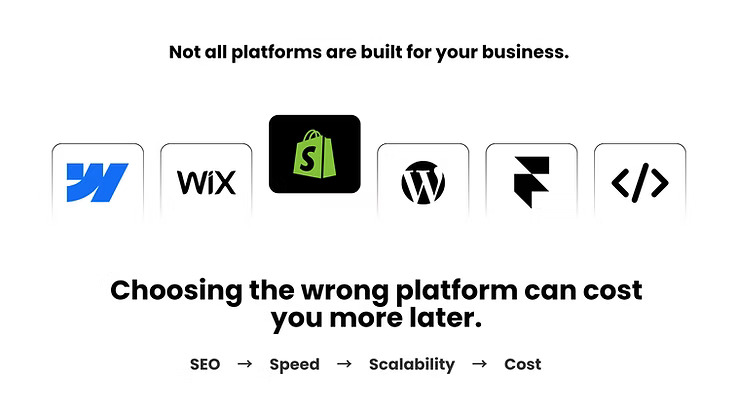
Why the Website Platform Matters More Than You Think
Your website platform controls the core of your online performance. It decides:
How fast your pages load
How well you rank on Google
How strong does your mobile experience feel
How easily can you scale
How smoothly your CRM and WhatsApp connect
How secure is your data?
How expensive your long-term maintenance becomes
A wrong platform choice creates hidden limitations that only appear later when your business tries to grow. Many Dubai businesses discover that the platform they chose cannot support bilingual pages, strong SEO, custom forms, dashboards, e-commerce, or automation.
A website built on the wrong platform becomes a long-term liability. The right platform becomes a long-term digital asset.
Top Mistakes Businesses Make When Choosing a Website Platform
Mistake 1. Choosing a Platform Only Because It’s Cheap
This is the most common and most damaging mistake. Many businesses pick the cheapest option or the quickest delivery and assume they’re saving money. But cheap platforms and low-cost freelancers usually use outdated templates, weak hosting, no SEO structure, poor mobile layouts, and limited scalability.
A website that costs AED 1,000 often ends up costing AED 10,000+ in future fixes because the entire foundation is weak. You pay more later for SEO cleanup, redesigns, hosting upgrades, page rebuilds, and missing features. Cheap websites also block your search rankings and reduce conversions, which means fewer leads and sales.
Businesses don’t realize their website is failing until enquiries drop, and by then it’s already hurting the business. Cheap today becomes expensive tomorrow, which is why investing in the right web design and development from the start makes a huge difference.
Mistake 2. Prioritizing Design Over Performance
Many businesses get impressed by a beautiful template and forget everything else. Design is important, but it is not the main driver of results. Performance is.
A platform might look visually impressive, but fail in:
Mobile responsiveness
Core Web Vitals
SEO structure
Image optimization
Hosting quality
Loading speed
Tools like Framer, Wix, and cheap WordPress themes often fall into this trap. They look clean on the surface, but perform poorly under real traffic conditions.
A website that looks good but performs poorly always loses. Visitors leave before the page loads, Google pushes it down the rankings, your ads get more expensive, and your conversions drop. That’s exactly why working with an experienced ecommerce website development company in Dubai makes such a big differencnce.
A pretty design cannot save weak performance.
Mistake 3. Ignoring SEO Capabilities
SEO is one of the biggest growth drivers for businesses in Dubai, yet many people choose platforms with weak SEO structures. Cheap platforms usually lack:
Proper header structure
Meta controls
Schema markup
Sitemap automation
Alt tags
Clean URL architecture
Framer and Wix are easy to build on, but not strong for competitive SEO. Shopify is great for e-commerce SEO, but not ideal for service-based content. WordPress and Webflow continue to be the strongest options for long-term search ranking.
If your business depends on Google traffic, your website platform must be SEO-friendly from day one. Rebuilding later means lost rankings, lost trust, and lost revenue.
SEO should be a deciding factor, not an afterthought.
Mistake 4. Not Planning for Future Growth
Most businesses choose a platform based only on their current needs. They don’t think about what they’ll need in 6 to 12 months.
Here’s what usually happens:
They want to add e-commerce, → the platform can’t support it
They want bilingual support → layout breaks
They want to publish blogs → CMS is too weak
They want custom dashboards → impossible
They want integrations → platform doesn’t support it
This is why many businesses end up rebuilding their website within the first year. A scalable platform whether it’s Webflow, Shopify, WordPress, or a custom build saves money in the long run because it grows with your business instead of blocking it. Working with a trusted ecommerce website development company in Dubai makes that transition smoother and future-proof.
The wrong platform kills momentum. The right platform accelerates growth.
Mistake 5. Choosing the Wrong Platform for the Business Model
Every platform is built for a different purpose. But many businesses choose the wrong one because they don’t know the strengths and weaknesses.
Common mistakes:
Using Wix for a fast-growing service company → weak SEO
Using Shopify for a business that doesn’t sell products → unnecessary cost
Using Framer for businesses that need strong search visibility → weak CMS
Using WordPress without proper maintenance → site breaks, plugins conflict
Using custom development for a simple company site → overspending
Correct pairing:
Webflow → best for service businesses, SEO, performance
Shopify → best for e-commerce
WordPress → best for content-heavy and flexible sites
Custom development → best for large, scalable, advanced systems
Wix → best for simple, small websites
Framer → best for personal brands or creative landing pages
Choosing the wrong platform slows your business instead of supporting it.
Mistake 6. Ignoring Mobile Experience
Over 70% of website traffic in the UAE comes from mobile. If your platform or template doesn’t offer precise mobile control, you lose customers instantly.
Cheap templates often have:
overlapping sections
broken spacing
unreadable fonts
clipped images
buttons too small to tap
forms that don’t submit
Google also punishes websites with a poor mobile experience by lowering rankings.
Any platform you choose must be tested on multiple screen sizes, not just desktop. Businesses that ignore mobile end up with websites that look good but perform poorly.
Mistake 7. Skipping Integration Requirements
Modern businesses rely on integrations for real-time communication and automation.
Your website must support:
WhatsApp
CRM (HubSpot, Zoho, Salesforce)
Booking systems
Payment gateways
Marketing tools
Automation platforms
Analytics and tracking
Cheap website platforms often break when connecting these tools or don’t support them at all.
If your website can’t integrate with your business systems, it slows everything: sales, marketing, customer service, and operations.
Before choosing a platform, check its integration ecosystem.
Mistake 8. Forgetting About Arabic + English Support
Dubai and GCC websites require bilingual support. But not all platforms handle Arabic well.
Common problems:
RTL layout breaking
Spacing issues
Wrong alignment
Poor typography
Broken navigation
Wix and Framer are known to struggle with proper bilingual formatting. Webflow, WordPress, and custom development support English + Arabic more reliably.
If bilingual support is important, the platform must handle RTL without manual hacks.
Mistake 9. Not Reviewing Technical Limitations
Most business owners don’t check what the platform cannot do. Every platform has limitations.
Examples:
Webflow: limited backend logic
Wix: weak database and SEO
Shopify: limited non-ecommerce features
Framer: weak CMS and SEO
WordPress: needs maintenance
Custom: takes longer and costs more
No-code platforms: restricted API access
Before choosing a platform, the business needs to understand the technical boundaries. If not, you’ll hit walls later and be forced to rebuild. This is where working with an experienced website development company in Dubai helps you make the right call from the start.
Mistake 10. Not Testing Speed or Core Web Vitals
Speed is everything in Dubai’s competitive market. Slow websites lose trust, traffic, and conversions.
Many businesses choose platforms that look modern but score poorly on:
Largest Contentful Paint
First Input Delay
CLS shift
Mobile load time
Platforms with heavy animations (Framer, cheap WordPress themes, Wix) often produce weak speed scores.
Any platform you choose must pass Core Web Vitals on both mobile and desktop. If not, your SEO and ads will fail.
How to Choose the Right Platform (Simple Decision Guide)
Use this framework:
If SEO is important:→ Webflow or WordPress
If you need e-commerce:→ Shopify
If your business will expand:→ Webflow, WordPress, or custom
If you need a quick, simple site:→ Wix
If you want creative landing pages only:→ Framer
If you need dashboards, portals, or custom logic:→ Custom development
If you need bilingual support:→ Webflow, WordPress, or custom
Ask yourself:
How fast do I want to grow?
How important is SEO for my business?
Do I need a mobile-first design?
Do I need integrations?
Will I need new features in 6–12 months?
The right platform becomes part of your growth strategy.
The wrong one becomes a financial burden.
Conclusion
Choosing the right website platform is not a small decision. It quietly shapes every part of your online performance, from how fast your pages load to how well you rank on Google, how smoothly customers interact with your brand, and how easily you can grow in the future. Most businesses make mistakes because they rush the decision, follow trends, or choose the cheapest option without understanding the long-term cost.
A website is not just a design or a collection of pages. It is the core of your digital presence. When built on the right platform, it becomes a growth engine that brings enquiries, strengthens your brand, improves your SEO, and supports your future plans. When built on the wrong platform, it becomes a silent barrier that slows everything down, blocks rankings, limits features, and forces expensive rebuilds.
The smartest businesses in 2025 choose platforms intentionally. They focus on speed, mobile performance, SEO structure, scalability, and integration capability. They pick tools that match their business model instead of chasing shortcuts. And because of that, their websites perform better, convert higher, and last longer.
If you choose a platform that supports your long-term goals, your website becomes an asset that grows with your business, not a problem you have to fix again and again.
Want to make sure you choose the right platform from day one? Talk to our Dubai team and we’ll walk you through a custom platform selection plan your growth depends on it.
