

The Reality of App Development Mistakes in Dubai Startups
Dubai’s tech scene is growing fast, and every month new startups launch ambitious apps hoping to stand out. The energy is high, competition is strong, and everyone wants to move quickly. But this fast pace often leads to overlooked steps that can hurt the final product.
Many founders jump into development without fully understanding what it takes to build a stable, scalable app. This is common in the early stages of Mobile App Development in Dubai, where the pressure to launch quickly pushes teams toward shortcuts or rushed decisions. The result is an app that looks promising at first but struggles when real users start interacting with it.
These issues don’t happen because founders lack vision. They happen because app development involves dozens of moving parts from design and backend structure to performance, testing, and user experience. When any of these areas are skipped or rushed, small issues turn into expensive problems later.
The good news is that these mistakes are avoidable. This guide breaks down the most common problems Dubai startups face and shows you how to avoid them, so your app can launch confidently and grow smoothly from day one.
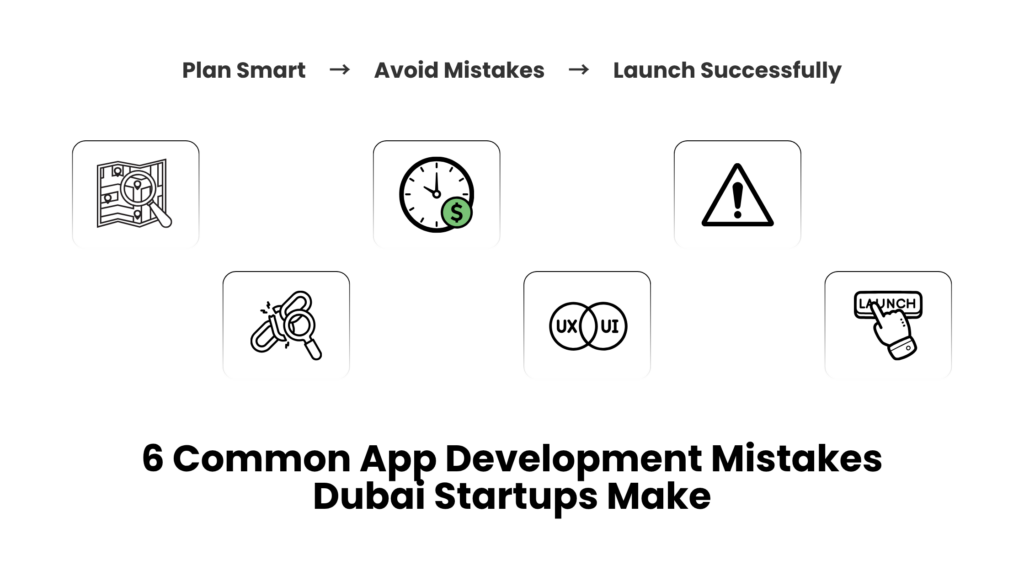
The Most Common App Mistakes
Before we dive deeper, here’s a quick look at the most frequent mistakes Dubai startups make during app development. These issues might seem small at first, but they have a big impact on growth, user satisfaction, and long-term success.
- No real market validation: building without knowing what users actually need.
- Unrealistic budgets or timelines: rushing the process and damaging quality.
- Choosing the wrong development team: poor communication and weak technical skills lead to unstable apps.
- Weak backend and slow performance: apps that lag, freeze, or crash under traffic.
- Outdated or confusing UI/UX: designs that don’t match Dubai’s fast-moving user expectations.
- No ASO or launch plan: apps go live with no visibility or search presence.
- No long-term maintenance plan: updates stop, issues grow, and users leave.
This quick summary sets the stage for the deeper breakdown ahead and helps you spot the exact problems holding your app back.
The Major Mistakes Dubai Startups Make
Mistake 1. Skipping Proper Market Validation
One of the biggest reasons Dubai startups struggle is jumping into development before confirming what users actually want. The excitement of building an app often pushes founders straight into design and development without proper research. The result? A polished app that solves the wrong problem or attracts the wrong audience.
Skipping validation is expensive because the product looks complete, but doesn’t fit real market needs. Even simple validation steps can prevent this:
- Short user surveys
- Talking to potential customers
- Studying competitors
- Testing a quick prototype
- Running a small feedback loop
Dubai’s audience is diverse and moves fast. If the app doesn’t match their expectations, users leave quickly. Fixing these mistakes after launch takes far more time and money. Proper validation early on saves months of rework and gives your idea a much clearer direction.
Mistake 2. Underestimating Cost & Timeline
Many founders start with rushed timelines and unrealistic budgets. They want a full product delivered quickly and cheaply, which leads to weak architecture, poor planning, and unstable features. When development is squeezed, quality always suffers, and the fixes later cost even more.
A strong app needs time for:
- Proper planning
- UI/UX design
- Backend development
- Testing across devices
- Performance optimization
Skipping or rushing these steps creates technical debt: bugs, crashes, and unstable builds that slow down the launch. Most delays and extra costs happen because the initial plan wasn’t realistic. When founders understand the real scope from the beginning, the entire project moves smoothly, and the final product is far more stable.
Mistake 3. Choosing the Wrong Development Team
One of the most damaging mistakes Dubai startups make is picking a development team based on the cheapest quote rather than real expertise. This leads to weak communication, outdated development practices, missing documentation, and constant technical issues.
Warning signs of the wrong team include:
- No clear milestones
- Poor or unclear communication
- Outdated tech stack
- Missing documentation
- Always saying “yes” without giving guidance
The right team builds scalable architecture, clean code, and provides long-term support. A weak team does the opposite, creating problems that surface only after launch crashes, slow performance, and expensive rewrites. Your development partner shapes the entire journey from MVP to full product. Choosing wisely saves time, money, and user trust.
Mistake 4. Ignoring Performance & Scalability
Many Dubai startups focus on design first and treat performance as an afterthought. But once the app is in real users’ hands, slow loading, freezing screens, or crashing instantly damages trust. Performance issues usually come from shortcuts taken in the beginning, and they become expensive to fix later.
Common causes of poor performance include:
- Heavy images or videos
- Slow or unoptimized APIs
- Weak server architecture
- Poor database structure
- No caching or optimization layer
- Lack of testing on different devices
Dubai users expect speed. If the app lags even for a second, they uninstall without a second thought. Building with scalability early ensures your app can handle traffic spikes, grow smoothly, and adapt as your user base expands. Performance is not optional, it’s part of the foundation.
Mistake 5. Weak UI/UX That Doesn’t Match Dubai’s User Habits
UI/UX is one of the biggest reasons apps succeed or fail. Dubai users expect modern layouts, clean visuals, fast navigation, and seamless interaction. Many startups, however, choose cheap designs, cluttered screens, or outdated interfaces that frustrate users from the first tap.
Common UI/UX flaws include:
- Overcrowded screens
- Poor spacing and alignment
- Small or unclear buttons
- Complicated navigation
- Too many steps to complete simple actions
Good design isn’t about looking fancy, it’s about creating clarity and comfort. When your app feels smooth and intuitive, users trust it instantly. This trust is what turns visitors into long-term users. For startups in Dubai’s competitive market, strong UI/UX isn’t optional, it’s a major growth driver.
Mistake 6. Neglecting ASO & Launch Preparation
Many startups spend months building the app, but forget to prepare for the moment it hits the store. Without proper ASO (App Store Optimization), even the best apps remain hidden. Your app needs strong keywords, clean screenshots, and a clear description to appear in search results.
Most Dubai startups fail in ASO because they:
- Don’t use the right keywords
- Upload plain or unclear screenshots
- Skip preview videos
- Write unclear app descriptions
- Launch without early reviews
- Don’t test the app store listing
When your ASO is weak, your app’s visibility drops instantly, which means fewer downloads and slower growth. ASO should be treated with the same importance as design and development. It’s your first impression and your main source of organic traffic.
Mistake 7. No Plan for Maintenance & Long-Term Support
A surprising number of startups believe the work is done after launch. In reality, that’s when the real journey begins. Apps need regular updates to stay compatible, secure, and smooth. Without proper maintenance, even a well-built app becomes outdated within months.
Weak or missing maintenance leads to:
- Crashes after OS updates
- Security vulnerabilities
- Broken features
- Slow performance over time
- Poor reviews
- Decreasing user trust
This is where choosing the right partner matters. A serious development team prepares you for long-term success, not just launch day. This is why many startups rely on experienced teams who understand the complete lifecycle of Mobile App Development in Dubai, including after-launch support and continuous optimization. A strong maintenance plan protects your investment and ensures your app stays reliable as your audience grows.
Essential Features Every Dubai Startup App Should Include
Even if your idea is strong, your app needs certain core features to meet Dubai’s user expectations. These features make the app feel modern, trustworthy, and easy to use, and they help you compete in a fast-moving market.
Here are the must-have elements that every Dubai startup should prioritize:
- Fast Onboarding: Simple sign-up options (Google, Apple, phone number) help reduce friction and increase first-day engagement.
- Clean and Accessible UI: Dubai’s users prefer minimal screens, clear buttons, readable fonts, and layouts that don’t feel cluttered.
- Strong Performance: Users expect instant loading. Smooth navigation, optimized images, and fast backend responses are essential.
- Mobile-Friendly Security: Features like OTP login, secure APIs, and encrypted data storage build user trust from day one.
- Smart Notifications: Helpful reminders or updates (not spam) keep users active and returning regularly.
- Offline or Low-Network Support: Parts of the app should still work even when the connection is weak, especially important in service-based apps.
- Easy Support Access: Live chat, FAQs, or automated help improve user satisfaction and reduce drop-offs.
Adding these features early gives your app a stronger foundation and a smoother user experience, making it easier to grow and scale in Dubai’s competitive market.
How Dubai Startups Can Avoid These Mistakes
Avoiding these mistakes isn’t about spending more, it’s about planning smarter from the start. In Mobile App Development in Dubai, the most successful startups follow a clear and structured approach that keeps the project on track.
1. Validate Your Idea Early
Don’t build based on assumptions. Use:
- Short user surveys
- Competitor research
- Prototype testing
- Small feedback loops
This helps you confirm real demand before investing heavily.
2. Create a Realistic Roadmap
A solid plan should include:
- UI/UX design
- Backend structure
- Testing cycles
- Launch preparation
A clear roadmap reduces confusion and prevents rushed decisions later.
3. Prioritize Clean UI/UX & Strong Performance
Dubai users expect premium app experiences. Focus on:
- Simple layouts
- Clear navigation
- Fast loading
- Smooth animations
- Testing on different devices
Good design and speed are the foundation of user trust.
4. Prepare ASO Before Launch
Don’t wait until the end. Start early with:
- Strong keywords
- Clean screenshots
- A clear description
- Preview videos
- Early reviews via beta testers
ASO makes your app discoverable from day one.
5. Plan for Ongoing Maintenance
Growth doesn’t stop at launch. You’ll need:
- Regular updates
- Bug fixes
- Feature improvements
- Performance tuning
Apps that stay fresh always retain more users.
Why Dubai Businesses Trust DOT IT for Mobile App Development in Dubai
Dubai startups choose DOT IT because we focus on building apps that grow steadily, not apps that fall apart after launch. We start by understanding your idea deeply, validating the concept, and designing a clear roadmap that avoids the common mistakes most founders make. Every part of the process, from UI/UX to backend engineerin,g is built for stability, scalability, and long-term success.
Here’s what makes us different:
- Smart Planning & Validation: We help you refine your idea, validate it with users, and build only what people actually need.
- Clean UI/UX That Fits Dubai’s Market: Modern layouts, simple navigation, and smooth experiences tailored to Dubai’s fast-moving audience.
- Fast, Reliable Performance: Optimized code, strong backend structure, and scalable architecture to handle growth effortlessly.
- Complete ASO & Launch Support: We prepare your keywords, screenshots, previews, and store descriptions for better visibility.
- Long-Term Maintenance & Updates: Bug fixes, new features, security patches, and continuous improvements, we stay with you after launch.
- Transparent Process & Clear Communication: You always know what’s happening, what we’re building, and how it impacts your growth.
If you want a partner who truly understands the full journey of Mobile App Development in Dubai, DOT IT is the team that helps you build, launch, and grow with confidence.
Why do most Dubai startup apps fail early?
Most apps fail because founders rush the process, skipping validation, choosing cheap development, or launching without proper testing or ASO. These issues create a poor user experience and slow growth from day one.
How important is UI/UX for Dubai users?
Very important. Dubai users expect fast, clean, modern app experiences. If the design feels outdated or confusing, users leave instantly, even if the idea is strong.
Do Dubai startups really need long-term maintenance?
Yes. Without regular updates, apps break after OS changes, slow down, and become less secure. Ongoing maintenance keeps your app stable, fast, and trustworthy.
What is the biggest technical mistake startups make?
Weak backend structure. When the backend isn’t scalable or optimized, the app becomes slow, crashes under traffic, and gets expensive to fix later.
How can DOT IT help my startup avoid these problems?
DOT IT helps with planning, validation, UI/UX design, performance optimization, ASO, and long-term support. We guide you through the full journey of Mobile App Development in Dubai, ensuring your app grows smoothly.
