

The Hidden Price of Choosing a Cheap App Developer
A low-priced app might look like a great deal at first, but the real cost shows up later slow performance, constant bugs, missing features, poor design, and expensive fixes you never planned for. Many businesses choose the cheapest option to save money, only to discover that the app can’t scale, doesn’t work smoothly, and needs major repairs within months.
Cheap development often skips the basics that make an app stable: proper planning, clean code, strong backend structure, security, and testing. Without these foundations, the app may “work” at launch, but it quickly becomes a problem the moment users increase or new features are needed.
This blog breaks down why cheap app development ends up costing far more in the long run and how choosing quality from the start protects your time, money, and reputation.
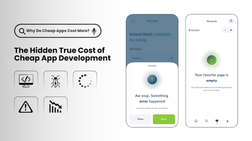
The Real Cost of a Low Cost App
There’s a big difference between “price” and “cost.” The price is what you pay upfront. The cost is what you end up paying over time in fixes, redesigns, rebuilds, and lost users.
Cheap app development usually means cutting corners everywhere: architecture, security, design, testing, and maintenance. Instead of planning for long-term growth, the project becomes a quick job focused only on completing the basics. And although the app may seem fine when delivered, the problems begin as soon as users start interacting with it.
Loading issues, broken features, unstable servers, and outdated UI quickly appear. What seemed like savings becomes a piling list of hidden costs. In many cases, businesses end up spending two to three times more to repair or rebuild the app than they would have spent on quality development from the beginning.
A cheap app may cost less today, but it costs a lot more tomorrow.
Common Problems With Low Cost App Development
Cheap app development often leads to predictable issues that show up within weeks or months of launch. Here are the most common problems:
Poor Code Quality
Low-cost development often means rushed coding with no structure. Messy code makes the app slow, unstable, and difficult to improve later. Adding new features becomes expensive because everything breaks easily.
No Proper UI/UX Design
Cheap apps skip real design work. Screens feel outdated, buttons aren’t placed properly, and the user flow doesn’t make sense. This results in low engagement, higher bounce rates, and poor reviews.
Weak Backend Structure
A fragile backend means the app can’t handle growing users, heavy tasks, or real-time data. As soon as traffic increases, the app starts crashing or slowing down.
Missing Security Standards
Cheap development rarely includes encryption, secure APIs, or proper data handling. This puts user data at risk and can even cause legal problems in industries like healthcare, finance, and e-commerce.
Little to No Testing
Testing takes time, and cheap developers skip it. Bugs go unnoticed. Features break randomly. Users face errors that should have been caught during development.
No Scalability for the Future
Cheap apps are built just to “work” at the moment. They don’t prepare for future features, user growth, or updates. As soon as you try to scale the app, everything starts falling apart.
These issues don’t appear because the developer is bad. They appear because the budget doesn’t allow time for the right planning, right coding, and right quality checks.
The Hidden Costs You Don’t See at First
Cheap app development looks affordable because the initial quote is low. But what you don’t see upfront are the hidden costs that show up later:
Fixing Bugs Constantly
Bugs that should have been prevented end up needing weekly fixes, increasing both time and cost.
Rebuilding Core Features
Poorly designed features need to be rebuilt from scratch when the app starts breaking.
Server & Stability Issues
Weak hosting setups cause crashes, downtime, and slow performance — all of which cost extra to resolve.
UI Redesigns
Bad design means low engagement. Eventually, you have to invest in a full redesign.
Lost Users & Poor Ratings
Slow performance or bugs make users uninstall the app quickly. Recovering trust later becomes expensive.
Downtime Costs
Every hour the app is down can mean lost customers and damaged credibility.
These hidden costs are usually much more than the money “saved” by choosing a cheap developer. By the time all these issues are fixed, the total cost becomes far higher than a well-built app would have cost in the first place.
Why Low Cost Apps Fail to Scale
Scaling is one of the biggest challenges for apps built on small budgets. Cheap development focuses only on basic functionality, not growth. As soon as your user base increases or you try to add new features, problems start appearing.
A cheap app usually lacks:
A scalable backend
Clean and extendable code
Proper database design
Efficient APIs
Strong security layers
Performance-optimized architecture
Without these foundations, the app struggles to grow. You might notice slow loading, failed requests, or features breaking when traffic rises. In worst cases, developers tell you that adding new features is impossible unless the entire app is rebuilt.
A scalable app isn’t about adding more servers. It’s about smart planning, clean structure, and quality engineering, all things that cheap development typically skips.
How Bad Performance Affects Your Business
App performance plays a direct role in how people see your brand. When an app is slow, freezes, or crashes at the wrong moment, users don’t wait, they close it and move on. In competitive industries, that often means losing them to a faster, more polished alternative.
Poor performance creates a ripple effect across your entire business:
Fewer downloads
Low user retention
Negative reviews on app stores
Higher uninstall rates
Drop in conversions and revenue
Loss of trust in your brand
Even if your app idea is strong, users judge it by how it performs on their device. A slow or buggy app feels unprofessional, and that impression transfers directly to your company.
High performance isn’t just a nice-to-have. It’s the base of a good user experience. When the app feels quick and reliable, people stay longer, engage more, and are far more likely to return.
How Quality Development Saves Money Long-Term
Investing in quality development may seem expensive at first, but it actually saves far more money over the life of your app. When an app is built properly from day one, it avoids the constant cycle of bugs, fixes, rebuilds, and downtime that cheap development usually brings. A well-built app becomes an asset, not a recurring cost.
Clean, Structured Code
Clean code is easier to manage, update, and scale. Developers can add new features without breaking existing ones, which reduces your long-term development expenses.
Stronger UI/UX
Good design improves engagement and user satisfaction. When users enjoy using your app, you avoid costly redesigns and increase conversions naturally.
Stable Backend
A strong backend can handle more users and heavier tasks without crashing. This reduces support tickets, downtime, and emergency fixes.
Built for Scalability
Quality development prepares your app for growth. You can introduce new features, expand user capacity, or upgrade systems without rebuilding the entire app.
Lower Maintenance Costs
Well-planned apps have fewer bugs, cleaner logic, and stronger architecture, which means less money spent on constant repairs.
Better Security
Secure development prevents data leaks, vulnerabilities, and costly compliance issues. Avoiding a security failure alone can save a business thousands.
In the long run, quality development costs less because you’re not paying repeatedly for fixes. You invest once in a strong foundation and avoid the endless expenses that come with a poorly built app.
Signs You Need to Fix or Rebuild a Cheap App
If your app was built on a tight budget, the warning signs usually start showing up fast, sometimes so slowly that you don’t realize the real problem until users begin complaining. Cheap development shortcuts eventually surface, and when they do, they affect everything from performance to user trust.
Here are the clearest signs your app needs a serious fix or a full rebuild:
Frequent crashes or sudden freezes
Slow loading screens that frustrate users
Constant complaints about bugs or broken features
Struggle to add new features without breaking old ones
The developer refuses or is unable to make updates
Security warnings, data issues, or unstable APIs
An outdated UI that feels disconnected or confusing
Errors and downtime when traffic increases
These issues don’t go away on their own. In fact, they usually get worse as more users join or new updates roll out. If you’re seeing two or more of these signs, it’s a clear signal that your app needs structured optimization or a complete rebuild to protect your investment.
Why Businesses Choose DOT IT for Reliable App Development
Businesses choose DOT IT because they want an app that’s built properly, not rushed, not patched together, and not something that will fall apart in six months. We focus on quality from the very first step, making sure your app is fast, stable, secure, and ready for real growth. Our approach looks at the full picture, not just the surface.
Here’s what sets us apart:
Clean, maintainable code that’s easy to update and scale
A strong backend foundation built to handle real traffic and complex features
Thoughtful UI/UX design that keeps users engaged and improves conversions
Scalable planning so you can add new features without rebuilding the whole app
Proper testing and QA to catch issues before they reach your users
Clear communication throughout the entire project
Long-term support to keep your app updated, fast, and secure
When you work with DOT IT, you’re not just getting an app, you’re getting a product that grows with your business. Whether you’re starting fresh, rebuilding a low-quality app, or fixing major performance issues, we deliver solutions that feel modern, reliable, and built for the future.
Conclusion
Choosing a cheap development option can feel tempting when you’re trying to save money, but the true cost shows up later in broken features, slow performance, unhappy users, and expensive rebuilds. What looks like a small “upfront saving” often turns into months of repairs, lost revenue, and damage to your brand. A high-quality app requires thoughtful planning, clean code, a strong backend, proper testing, and a team that understands long-term growth. These are the foundations that cheap development simply doesn’t include.
When you invest in quality from the beginning, you avoid the endless cycle of fixes and create an app that performs well, scales easily, and keeps users coming back. A well-built app becomes an asset: it supports your business, strengthens your reputation, and helps you grow without technical limitations.
If your current app feels slow, outdated, or hard to improve, this is the right moment to rebuild it the proper way. The sooner you fix the foundation, the sooner your app can start delivering the experience your users expect and the results your business deserves.
