
Real Estate App Development Cost in the UAE
The UAE property market is moving fast, and buyers want everything at their fingertips. Whether they’re checking off-plan launches or booking a viewing, they prefer using an app that feels smooth and reliable. This shift is pushing agencies and developers to invest in custom mobile apps, making the Real Estate App Development Cost UAE a key factor to consider.
A clean, well-designed real estate app doesn’t just display properties. It builds trust, improves lead quality, and helps your brand stand out in a competitive market. But before starting the project, every business wants clarity on one important question: What does it actually cost to build a real estate app in the UAE?
This guide breaks everything down in a simple way. You’ll understand how features, design, integrations, and complexity influence the final price, and what you can realistically expect when working with a professional mobile app development team in the UAE.
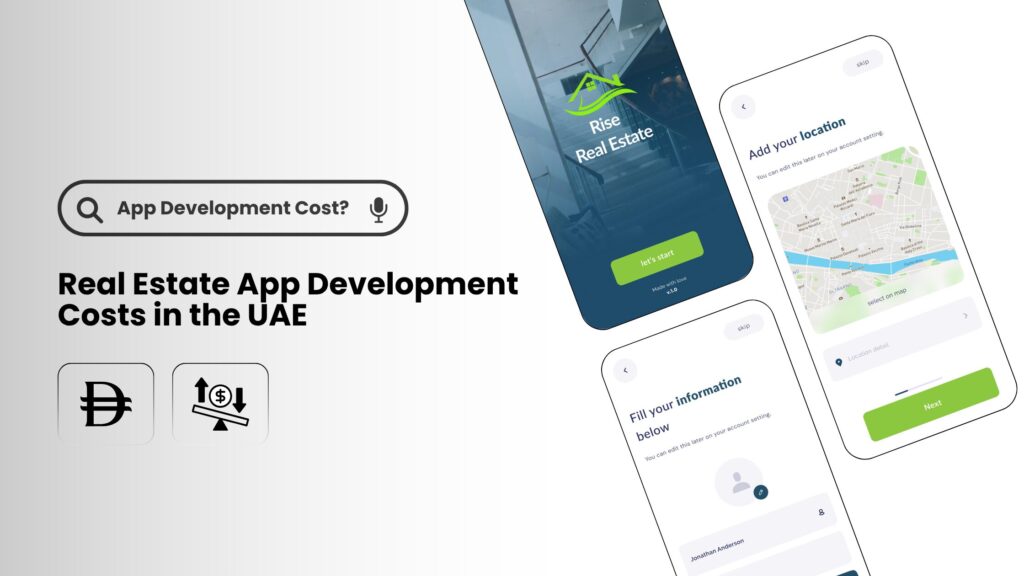
Why Real Estate Apps Are Booming in the UAE
The UAE has become one of the most active property markets in the world. New projects launch every month. International buyers continue to invest. Residents are upgrading to better communities. In this environment, people want trustworthy information fast, and they want it without jumping through complicated websites.
A real estate app solves this instantly. It lets users explore properties, compare prices, view locations, and contact agents in seconds. The experience feels smoother, more personal, and far more convenient than browsing through multiple platforms.
For real estate companies, the benefits go even deeper. A dedicated mobile app builds credibility, improves lead quality, and gives agencies a direct communication channel with serious buyers. It also reduces dependence on third-party listing sites, which means more control over your brand and your customer journey.
In short: demand is rising, competition is high, and the companies that invest in a clean, user-friendly app are the ones gaining the most traction in the UAE market.
Key Features That Influence App Development Cost
The cost of building a real estate app depends heavily on the features you choose. Some features are simple and affordable, while others require more design, integrations, and engineering time. Here are the most common features that impact pricing in the UAE:
Property Listings With Advanced Filters
Users expect to browse listings easily. Filters like price, area, location, number of rooms, and property type make the experience smooth and save time.
High-Quality Photos and Virtual Tours
Apps with virtual tours, 3D walkthroughs, and high-resolution images feel more premium but require more development work, which increases the cost.
Map Integration
Integrating smart maps with nearby landmarks, schools, transport options, and community data adds value for users and adds to the total development time.
User Accounts and Profiles
Allowing users to save searches, favourite properties, and receive updates improves engagement but needs backend setup and secure authentication.
Lead Forms and Direct Inquiry Options
Simple inquiry buttons, WhatsApp chat, or built-in messaging help users contact agents instantly. Adding these features improves conversion but increases complexity.
Mortgage Calculator
Many UAE buyers rely on financing. Adding a simple, clean calculator boosts user experience and gives you an edge over competitors.
Notifications and Alerts
Push notifications for new properties or price drops help agencies stay top-of-mind and create more returning users.
CRM or ERP Integration
This is one of the bigger cost drivers. Syncing your app with your internal CRM enables real-time lead management but requires custom development and testing.
Types of Real Estate Apps and Their Cost Range
Not all real estate apps are the same. The type of app you want to build has a major impact on the final budget. Here are the most common types in the UAE market:
Basic Property Listing App
Simple browsing, filters, property details, and inquiry buttons.
Cost range: AED 30,000 – AED 50,000
Custom App for Real Estate Agencies
Designed for agencies or brokers with branded UI, lead capture, saved searches, and better integrations.
Cost range: AED 60,000 – AED 120,000
Marketplace App (Buyer + Seller + Agent)
A more advanced platform where multiple agents or developers can list properties. Includes dashboards, chat, and advanced filters.
Cost range: AED 150,000 – AED 250,000+
Premium App With 3D Tours and Advanced Features
Virtual tours, rich media, interactive maps, and strong CRM automation.
Cost range: AED 200,000 – AED 350,000+
This section helps readers understand that the cost depends entirely on the level of experience they want their users to have.
Cost Breakdown: What You’re Actually Paying For
When businesses ask about app development cost, they’re usually thinking only about design and coding. In reality, the final price includes several layers of work that come together to create a smooth, stable, and professional real estate app. Here’s a simple breakdown of what you’re investing in:
UI/UX Design
This covers the layout, colours, icons, and overall feel of the app. A clean design makes navigation easier and keeps users engaged.
Frontend Development
Everything users interact with, screens, buttons, animations, and property cards, is built here. The more features you add, the longer this part takes.
Backend Development
This is the engine behind the app. It handles user accounts, property data, search filters, inquiries, and integrations.
API Integrations
Maps, WhatsApp, CRMs, payment systems, or third-party data sources are connected through APIs. Each integration adds extra development and testing time.
Database Setup
Property listings, images, user details, and saved favourites all need secure and scalable storage.
Admin Panel
Most UAE agencies want an admin dashboard to manage listings, enquiries, and user data. This is a separate development effort.
Testing & Quality Assurance
Before the app goes live, everything is tested to make sure it works smoothly on different devices.
Launch & Store Submissions
Publishing on the App Store and Play Store requires proper compliance, screenshots, and configurations.
Ongoing Maintenance
Updates, bug fixes, new features, and OS compatibility are part of long-term costs.
This breakdown helps agencies understand where the budget goes and why cutting corners can affect quality.
Realistic Cost Range for Real Estate App Development in the UAE
Real estate app development costs vary depending on features, complexity, and the development team’s experience. Here’s a realistic view based on the UAE market:
Basic App
AED 30,000 – AED 50,000
Good for small agencies that want simple listings, filters, and inquiry options.
Standard Agency App
AED 60,000 – AED 120,000
Ideal for businesses that need branding, saved favourites, user profiles, and smoother integrations.
Advanced Marketplace App
AED 150,000 – AED 250,000+
Designed for companies building a multi-agent or multi-developer platform with chat, dashboards, and stronger backend logic.
High-End App With Premium Features
AED 200,000 – AED 350,000+
Includes 3D tours, interactive maps, advanced CRM sync, automation, and high-performance features.
At this point in the blog, you can naturally point readers to your page by saying something like:
“A more detailed overview of mobile app development in Dubai is available on our website.”
Real Estate App Development Cost UAEHow Long Does It Take to Build a Real Estate App?
The time required to build a real estate app depends on the app’s complexity, features, and integrations. A basic app can be ready quite fast, while advanced platforms need more planning, testing, and development.
Basic App
4–6 weeks
Covers simple listing features and a clean user flow.
Mid-Range App
8–12 weeks
Includes branded UI, user accounts, notifications, and stronger backend logic.
Advanced App
14–20+ weeks
Marketplace logic, chat systems, dashboards, CRM integrations, and 3D features require more time to build and test properly.
The goal is not just speed, it’s building something stable, scalable, and reliable for long-term use.
Choosing the Right Real Estate App Development Partner in the UAE
The success of your app depends heavily on the team that builds it. A real estate app is more than screens and buttons it needs a clean design, a strong backend structure, and reliable long-term support. When choosing a development partner in the UAE, here’s what you should look for:
Proven Experience in Real Estate Projects
Agencies that have already built property apps understand listings, user flows, and CRM integrations better.
Strong UI/UX Design Skills
A good real estate app should look polished and feel simple to use. Poor design leads to low engagement.
Clear Development Process
You should know how your app will move through design, development, testing, and launch. Transparency builds trust.
Post-Launch Support
Apps evolve. You need a team that can handle updates, add new features, and respond quickly when you need help.
Local Understanding
The UAE market has its own trends and expectations. A team that understands this can build an app that truly fits your audience.
Choosing the right partner makes the difference between a smooth launch and a stressful one.
How a Well-Built Real Estate App Boosts Sales
A strong real estate app doesn’t just look good, it directly impacts sales and client trust. Here’s how:
Faster Lead Response
Users can call, chat, or inquire instantly, which turns interest into real meetings.
Better Lead Quality
Apps attract more serious buyers who are genuinely browsing properties.
Stronger Brand Perception
An app positions your agency or development company as modern, reliable, and professional.
Better User Engagement
Notifications, saved favourites, and personalized suggestions bring users back more often.
More Direct Sales Opportunities
You’re not relying on portals or third-party sites. You’re building your own ecosystem and owning your customer journey.
In a competitive market like the UAE, these advantages translate into more deals and stronger long-term growth.
Why Businesses Trust DOT IT for Real Estate App Development
Real estate companies across the UAE choose DOT IT because they want a reliable team that understands both technology and the property market. We focus on clean UI/UX, strong performance, and simple user flows that help you convert more leads.
Our process is straightforward and transparent. We work closely with you to shape the features, design the interface, build the backend, and launch the app smoothly on both app stores. Whether you’re a real estate agency, a developer, or a startup building a marketplace, we help you create an app that feels fast, stable, and easy for users.
For a deeper look at our capabilities, you can explore our full service page here:
Mobile App Development in Dubai.
Get a Custom Quote for Your Real Estate App
If you’re planning to build a real estate app in the UAE, the smartest first step is to get clarity on your features, goals, and the user experience you want to offer. Once those pieces are clear, it becomes easy to shape the right development plan and a realistic budget.
Our team can help you map everything out in a straightforward way. You tell us what you’re trying to build simple listing app, a full agency app, or a complete marketplace and we’ll guide you with transparent pricing, honest timelines, and the best approach for long-term growth.
Whether you’re an individual agent, a real estate agency, or a property developer, we’re here to help you turn your idea into a stable, fast, and modern mobile app that your users will actually enjoy using.
Ready to build your real estate app?
Conclusion
The UAE’s real estate market is growing quickly, and buyers now expect property information to be fast, accurate, and easy to explore. That’s why having your own mobile app is no longer just an upgrade, it’s a real competitive advantage. The cost of building a real estate app depends on how simple or advanced you want it to be, but the value it adds in trust, lead quality, and brand authority makes it a powerful long-term investment.
Whether you’re a real estate agency, a broker, or a developer, the right app helps you showcase your properties better, connect with users instantly, and stand out in a crowded market. With the right partner, you can build an app that feels smooth, performs well, and supports your growth for years to come.
If you’re ready to explore your options and see what your ideal app might cost, our team is here to guide you. Let’s build something that elevates your real estate business in the UAE.
How much does a real estate app cost in the UAE?
Basic apps start around AED 30,000, while advanced apps with CRM, 3D tours, or marketplace features can go above AED 150,000.
How long does development take?
Simple apps take about 4–6 weeks. More detailed apps usually need 8–12 weeks or longer.
What are the essential features?
Listings, filters, maps, high-quality photos, user accounts, favourites, inquiries, and notifications are the core features most UAE agencies need.
Do I still need an app if I have a website?
Yes. An app gives users a faster, more personal experience and helps you capture better-quality leads.
Will the app need maintenance?
Yes. Regular updates keep the app smooth, secure, and compatible with new devices.
The Reality of App Development Mistakes in Dubai Startups
Dubai’s tech scene is growing fast, and every month new startups launch ambitious apps hoping to stand out. The energy is high, competition is strong, and everyone wants to move quickly. But this fast pace often leads to overlooked steps that can hurt the final product.
Many founders jump into development without fully understanding what it takes to build a stable, scalable app. This is common in the early stages of Mobile App Development in Dubai, where the pressure to launch quickly pushes teams toward shortcuts or rushed decisions. The result is an app that looks promising at first but struggles when real users start interacting with it.
These issues don’t happen because founders lack vision. They happen because app development involves dozens of moving parts from design and backend structure to performance, testing, and user experience. When any of these areas are skipped or rushed, small issues turn into expensive problems later.
The good news is that these mistakes are avoidable. This guide breaks down the most common problems Dubai startups face and shows you how to avoid them, so your app can launch confidently and grow smoothly from day one.
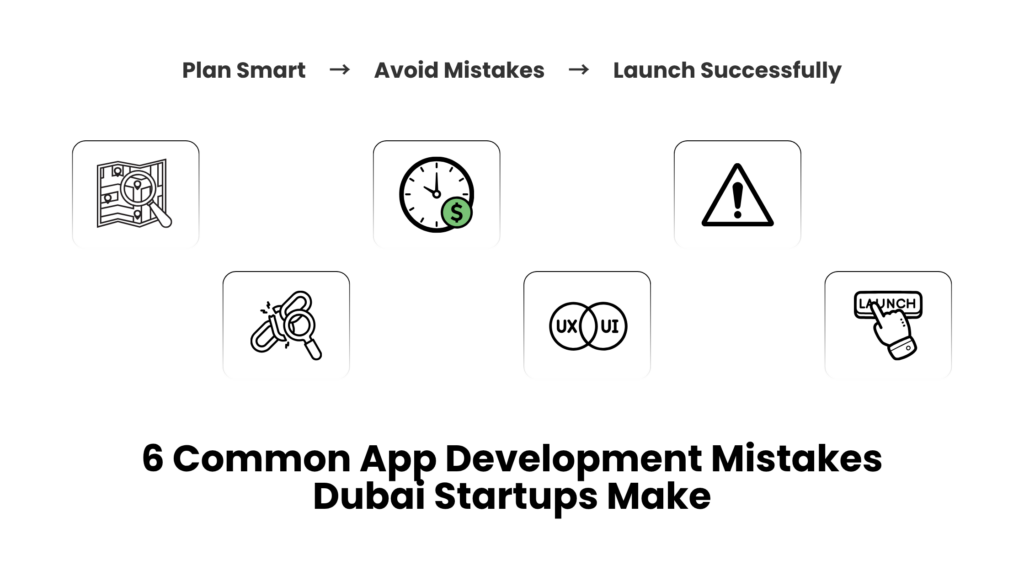
The Most Common App Mistakes
Before we dive deeper, here’s a quick look at the most frequent mistakes Dubai startups make during app development. These issues might seem small at first, but they have a big impact on growth, user satisfaction, and long-term success.
- No real market validation: building without knowing what users actually need.
- Unrealistic budgets or timelines: rushing the process and damaging quality.
- Choosing the wrong development team: poor communication and weak technical skills lead to unstable apps.
- Weak backend and slow performance: apps that lag, freeze, or crash under traffic.
- Outdated or confusing UI/UX: designs that don’t match Dubai’s fast-moving user expectations.
- No ASO or launch plan: apps go live with no visibility or search presence.
- No long-term maintenance plan: updates stop, issues grow, and users leave.
This quick summary sets the stage for the deeper breakdown ahead and helps you spot the exact problems holding your app back.
The Major Mistakes Dubai Startups Make
Mistake 1. Skipping Proper Market Validation
One of the biggest reasons Dubai startups struggle is jumping into development before confirming what users actually want. The excitement of building an app often pushes founders straight into design and development without proper research. The result? A polished app that solves the wrong problem or attracts the wrong audience.
Skipping validation is expensive because the product looks complete, but doesn’t fit real market needs. Even simple validation steps can prevent this:
- Short user surveys
- Talking to potential customers
- Studying competitors
- Testing a quick prototype
- Running a small feedback loop
Dubai’s audience is diverse and moves fast. If the app doesn’t match their expectations, users leave quickly. Fixing these mistakes after launch takes far more time and money. Proper validation early on saves months of rework and gives your idea a much clearer direction.
Mistake 2. Underestimating Cost & Timeline
Many founders start with rushed timelines and unrealistic budgets. They want a full product delivered quickly and cheaply, which leads to weak architecture, poor planning, and unstable features. When development is squeezed, quality always suffers, and the fixes later cost even more.
A strong app needs time for:
- Proper planning
- UI/UX design
- Backend development
- Testing across devices
- Performance optimization
Skipping or rushing these steps creates technical debt: bugs, crashes, and unstable builds that slow down the launch. Most delays and extra costs happen because the initial plan wasn’t realistic. When founders understand the real scope from the beginning, the entire project moves smoothly, and the final product is far more stable.
Mistake 3. Choosing the Wrong Development Team
One of the most damaging mistakes Dubai startups make is picking a development team based on the cheapest quote rather than real expertise. This leads to weak communication, outdated development practices, missing documentation, and constant technical issues.
Warning signs of the wrong team include:
- No clear milestones
- Poor or unclear communication
- Outdated tech stack
- Missing documentation
- Always saying “yes” without giving guidance
The right team builds scalable architecture, clean code, and provides long-term support. A weak team does the opposite, creating problems that surface only after launch crashes, slow performance, and expensive rewrites. Your development partner shapes the entire journey from MVP to full product. Choosing wisely saves time, money, and user trust.
Mistake 4. Ignoring Performance & Scalability
Many Dubai startups focus on design first and treat performance as an afterthought. But once the app is in real users’ hands, slow loading, freezing screens, or crashing instantly damages trust. Performance issues usually come from shortcuts taken in the beginning, and they become expensive to fix later.
Common causes of poor performance include:
- Heavy images or videos
- Slow or unoptimized APIs
- Weak server architecture
- Poor database structure
- No caching or optimization layer
- Lack of testing on different devices
Dubai users expect speed. If the app lags even for a second, they uninstall without a second thought. Building with scalability early ensures your app can handle traffic spikes, grow smoothly, and adapt as your user base expands. Performance is not optional, it’s part of the foundation.
Mistake 5. Weak UI/UX That Doesn’t Match Dubai’s User Habits
UI/UX is one of the biggest reasons apps succeed or fail. Dubai users expect modern layouts, clean visuals, fast navigation, and seamless interaction. Many startups, however, choose cheap designs, cluttered screens, or outdated interfaces that frustrate users from the first tap.
Common UI/UX flaws include:
- Overcrowded screens
- Poor spacing and alignment
- Small or unclear buttons
- Complicated navigation
- Too many steps to complete simple actions
Good design isn’t about looking fancy, it’s about creating clarity and comfort. When your app feels smooth and intuitive, users trust it instantly. This trust is what turns visitors into long-term users. For startups in Dubai’s competitive market, strong UI/UX isn’t optional, it’s a major growth driver.
Mistake 6. Neglecting ASO & Launch Preparation
Many startups spend months building the app, but forget to prepare for the moment it hits the store. Without proper ASO (App Store Optimization), even the best apps remain hidden. Your app needs strong keywords, clean screenshots, and a clear description to appear in search results.
Most Dubai startups fail in ASO because they:
- Don’t use the right keywords
- Upload plain or unclear screenshots
- Skip preview videos
- Write unclear app descriptions
- Launch without early reviews
- Don’t test the app store listing
When your ASO is weak, your app’s visibility drops instantly, which means fewer downloads and slower growth. ASO should be treated with the same importance as design and development. It’s your first impression and your main source of organic traffic.
Mistake 7. No Plan for Maintenance & Long-Term Support
A surprising number of startups believe the work is done after launch. In reality, that’s when the real journey begins. Apps need regular updates to stay compatible, secure, and smooth. Without proper maintenance, even a well-built app becomes outdated within months.
Weak or missing maintenance leads to:
- Crashes after OS updates
- Security vulnerabilities
- Broken features
- Slow performance over time
- Poor reviews
- Decreasing user trust
This is where choosing the right partner matters. A serious development team prepares you for long-term success, not just launch day. This is why many startups rely on experienced teams who understand the complete lifecycle of Mobile App Development in Dubai, including after-launch support and continuous optimization. A strong maintenance plan protects your investment and ensures your app stays reliable as your audience grows.
Essential Features Every Dubai Startup App Should Include
Even if your idea is strong, your app needs certain core features to meet Dubai’s user expectations. These features make the app feel modern, trustworthy, and easy to use, and they help you compete in a fast-moving market.
Here are the must-have elements that every Dubai startup should prioritize:
- Fast Onboarding: Simple sign-up options (Google, Apple, phone number) help reduce friction and increase first-day engagement.
- Clean and Accessible UI: Dubai’s users prefer minimal screens, clear buttons, readable fonts, and layouts that don’t feel cluttered.
- Strong Performance: Users expect instant loading. Smooth navigation, optimized images, and fast backend responses are essential.
- Mobile-Friendly Security: Features like OTP login, secure APIs, and encrypted data storage build user trust from day one.
- Smart Notifications: Helpful reminders or updates (not spam) keep users active and returning regularly.
- Offline or Low-Network Support: Parts of the app should still work even when the connection is weak, especially important in service-based apps.
- Easy Support Access: Live chat, FAQs, or automated help improve user satisfaction and reduce drop-offs.
Adding these features early gives your app a stronger foundation and a smoother user experience, making it easier to grow and scale in Dubai’s competitive market.
How Dubai Startups Can Avoid These Mistakes
Avoiding these mistakes isn’t about spending more, it’s about planning smarter from the start. In Mobile App Development in Dubai, the most successful startups follow a clear and structured approach that keeps the project on track.
1. Validate Your Idea Early
Don’t build based on assumptions. Use:
- Short user surveys
- Competitor research
- Prototype testing
- Small feedback loops
This helps you confirm real demand before investing heavily.
2. Create a Realistic Roadmap
A solid plan should include:
- UI/UX design
- Backend structure
- Testing cycles
- Launch preparation
A clear roadmap reduces confusion and prevents rushed decisions later.
3. Prioritize Clean UI/UX & Strong Performance
Dubai users expect premium app experiences. Focus on:
- Simple layouts
- Clear navigation
- Fast loading
- Smooth animations
- Testing on different devices
Good design and speed are the foundation of user trust.
4. Prepare ASO Before Launch
Don’t wait until the end. Start early with:
- Strong keywords
- Clean screenshots
- A clear description
- Preview videos
- Early reviews via beta testers
ASO makes your app discoverable from day one.
5. Plan for Ongoing Maintenance
Growth doesn’t stop at launch. You’ll need:
- Regular updates
- Bug fixes
- Feature improvements
- Performance tuning
Apps that stay fresh always retain more users.
Why Dubai Businesses Trust DOT IT for Mobile App Development in Dubai
Dubai startups choose DOT IT because we focus on building apps that grow steadily, not apps that fall apart after launch. We start by understanding your idea deeply, validating the concept, and designing a clear roadmap that avoids the common mistakes most founders make. Every part of the process, from UI/UX to backend engineerin,g is built for stability, scalability, and long-term success.
Here’s what makes us different:
- Smart Planning & Validation: We help you refine your idea, validate it with users, and build only what people actually need.
- Clean UI/UX That Fits Dubai’s Market: Modern layouts, simple navigation, and smooth experiences tailored to Dubai’s fast-moving audience.
- Fast, Reliable Performance: Optimized code, strong backend structure, and scalable architecture to handle growth effortlessly.
- Complete ASO & Launch Support: We prepare your keywords, screenshots, previews, and store descriptions for better visibility.
- Long-Term Maintenance & Updates: Bug fixes, new features, security patches, and continuous improvements, we stay with you after launch.
- Transparent Process & Clear Communication: You always know what’s happening, what we’re building, and how it impacts your growth.
If you want a partner who truly understands the full journey of Mobile App Development in Dubai, DOT IT is the team that helps you build, launch, and grow with confidence.
Why do most Dubai startup apps fail early?
Most apps fail because founders rush the process, skipping validation, choosing cheap development, or launching without proper testing or ASO. These issues create a poor user experience and slow growth from day one.
How important is UI/UX for Dubai users?
Very important. Dubai users expect fast, clean, modern app experiences. If the design feels outdated or confusing, users leave instantly, even if the idea is strong.
Do Dubai startups really need long-term maintenance?
Yes. Without regular updates, apps break after OS changes, slow down, and become less secure. Ongoing maintenance keeps your app stable, fast, and trustworthy.
What is the biggest technical mistake startups make?
Weak backend structure. When the backend isn’t scalable or optimized, the app becomes slow, crashes under traffic, and gets expensive to fix later.
How can DOT IT help my startup avoid these problems?
DOT IT helps with planning, validation, UI/UX design, performance optimization, ASO, and long-term support. We guide you through the full journey of Mobile App Development in Dubai, ensuring your app grows smoothly.
A Smarter Way for Dubai SMEs to Build an E-commerce Store
Launching an e-commerce store in Dubai seems straightforward at first. The city loves online shopping, digital payments are mainstream, and customers are quick to try new brands. However, once SMEs begin building their stores, the reality becomes a bit more complicated. Many end up overspending on features they never use, choosing platforms that don’t fit their business, or working with developers who deliver poor-quality work that needs to be rebuilt later.
The real issue isn’t the lack of budget. It’s the lack of clarity. When businesses don’t fully understand their goals, the platform they need, or how the development process works, they make decisions that cost them more in the long run. With proper planning, most of these expenses can be avoided entirely.
This guide breaks down the smarter, cost-friendly way to launch an online store in Dubai. You’ll learn what to focus on, what to skip, and how to choose the right e-commerce development partner so you get a website that works, grows, and doesn’t drain your budget.

Know What You Really Need Before You Spend Anything
The biggest financial mistakes happen before the website is even built. Businesses jump straight into development without taking a moment to think through the essentials.
Define your goals clearly
Start with a simple question: what do you want this online store to achieve in the first six months? Are you trying to validate an idea? Get your first 100 customers? Or move your offline sales online?
When your goals are clear, your website becomes focused. You don’t need every feature from day one. You don’t need a complex backend. You don’t need custom software unless your business model is truly unique. A proper e-commerce development partner can guide you, but the thinking starts with you.
Pick the right platform: Shopify, WooCommerce, or custom-build
Dubai SMEs often overspend because they choose the wrong platform. Some people force Shopify even when they need deep customization. Others push WooCommerce even though they prefer an easy-to-manage dashboard. And some request a fully custom website when a modern Shopify setup would’ve saved them thousands.
Here’s the simplest way to decide:
If you want fast setup and easy management, Shopify is perfect.
If you need flexibility, full control, and tighter customization, WooCommerce works well.
If your business logic is unique, a custom-built e-commerce solution becomes worth it.
Working with a Shopify development team or a WooCommerce specialist in Dubai helps you avoid paying for features you don’t need.
Build Smart: Focus on the Essentials First
Fancy features look good, but they don’t bring customers. What brings customers is a clean layout, smooth navigation, and a straightforward buying journey.
Start with a clean, conversion-focused UI/UX
This step saves more money than anything else. A good design is not about animations or effects. It’s about clarity. Customers should land on your site and immediately know what you sell, why it matters, and how to buy it. A professional UI/UX design agency in Dubai can create layouts that boost conversions without unnecessary complexity.
If your website is cluttered or confusing, no amount of marketing will save it. Start simple. Add visual polish later.
Avoid unnecessary features in the beginning
Many SMEs waste money on features like loyalty points, reward programs, advanced dashboards, and custom integrations right from day one. These can come later.
Your first version needs only:
Product pages
Cart
Checkout
Payment
Shipping
That’s it. Start lean. Grow as your sales grow.
Make Your Website Fast & Mobile Friendly
Dubai shoppers don’t wait. They browse while travelling, eating out, or relaxing. If your website is slow or not optimized for mobile, you lose customers instantly.
Speed is a direct revenue factor
A slow website loses sales every single day. Speed is not a tech thing, it’s a profit thing.
A proper website speed optimization service helps you:
Reduce loading time
Improve mobile browsing
Increase conversion rates
Rank better on Google
This is one of the smartest areas to invest in early. You get the returns quickly.
Mobile-friendly site first, mobile app later
A common mistake is building a mobile app before the website is even working properly. A mobile-friendly website is more than enough for your first phase.
You only need an Android or iOS app when:
You have regular repeat customers
You want push notifications
Your business requires app-only functionality
A mobile app development company in Dubai can guide you on when the timing is right. But don’t rush into app development unless you already have consistent website traffic and sales.
Use the Right Integrations Without Overspending
Integrations help your business run smoothly, but only if you choose the ones that matter.
Start with practical integrations
The must-have integrations for a cost-effective launch include:
Payment gateways like Stripe or Telr
Delivery partners like AREN, Quiqup, or local couriers
Basic CRM or email tools
Simple marketing automation
Expensive software is not necessary at the start. Basic integrations get the job done and cost very little.
Automate small tasks early
Automation is one of the easiest ways to reduce daily workload without hiring extra people.
Start with:
Abandoned cart emails
Welcome email sequence
Simple retargeting ads
Order confirmation workflow
An experienced e-commerce integration partner can set this up quickly and affordably.
Testing Saves Money Later
Many businesses lose money because their website wasn’t tested properly. Bugs lead to frustrated customers. Technical issues lead to abandoned carts. Payment failures lead to refunds and complaints.
A proper e-commerce launch includes:
Device testing (iPhone, Android, tablets, laptops)
Browser testing (Chrome, Safari, Edge, Firefox)
Checkout testing
Page speed testing
Mobile responsiveness checks
This is also where ongoing website maintenance (AMC) adds value. Regular updates, backups, security checks, and speed improvements can prevent expensive issues later.
The Real Places Dubai SMEs Waste Money
Let’s be honest. Overspending doesn’t happen because the business world is complicated. It happens because of wrong priorities.
Overspending on design and unnecessary features
A beautiful website is important. But design work should be simple and strategic, not flashy and overloaded.
You don’t need:
Fancy animations on every page
Excessive custom sections
Complex dashboards
Unnecessary plugins or apps
Start simple. The goal is sales, not decoration.
Choosing the wrong development partner
This is one of the most expensive mistakes. A cheap freelancer who delivers broken work will cost you more in the long run. A slow or inexperienced team can delay your launch by months.
The right partner helps you:
Choose the right platform
Build smart and lean
Improve UI/UX
Optimize speed
Plan long-term
Avoid unnecessary expenses
A good e-commerce development team in Dubai becomes a long-term investment, not a cost.
Your Step-by-Step Roadmap to Launch an E-commerce Store Without Overspending
If you want a cost-effective launch, the best approach is to keep things simple and build in the right order. Start by defining your core goals, so you’re clear about what your store needs to achieve in the first few months. Once that’s set, choose the platform that fits your business Shopify for quick setup, WooCommerce for flexibility, or a custom build if you need unique functionality.
Focus on clean UI/UX and get the essentials ready first: product pages, cart, checkout, payment, and shipping. Make speed and mobile experience a priority because that’s where most customers shop from in Dubai. Add only the necessary integrations, test everything carefully, and launch with a modest marketing budget. Once sales start coming in, maintain your website regularly to keep it fast, secure, and reliable.
Following this simple roadmap helps you avoid unnecessary costs and ensures your launch is smooth, stable, and ready to grow.
Conclusion
Dubai is one of the strongest e-commerce markets in the region, and the opportunity for SMEs is huge. But growing online isn’t about how much money you spend, it’s about how wisely you spend it. When you choose the right platform, focus on user experience, build only what you need, and invest in performance and testing, you get results faster without overspending.
Partnering with the right development team also makes a big difference. Whether you need help with e-commerce development, Shopify or WooCommerce setup, UI/UX design, mobile apps, speed optimization, or website maintenance, having the right support ensures your store grows steadily instead of turning into a financial burden.
Start simple. Scale slowly. Put your budget into the things that matter. That’s the real way Dubai SMEs build profitable, long-lasting online stores without burning money.
What’s the average cost to start an e-commerce store in Dubai?
It depends on your platform and features. Most SMEs can launch affordably if they start with essentials and upgrade later.
Should I choose Shopify or WooCommerce?
Shopify is easier to manage. WooCommerce offers more flexibility. Pick the one that matches your business needs.
Do I need a mobile app from day one?
No. A fast, mobile-friendly website is enough to start. Build an app only when you have steady traffic and repeat customers.
How can I avoid overspending during development?
Focus on core features, keep the design simple, and work with a reliable e-commerce development partner.
Why do I need website maintenance?
Maintenance keeps your store secure, fast, and error-free. It prevents costly issues and supports long-term growth.
Why Choosing the Right Web Development Partner Matters in Dubai
Choosing a web development partner in Dubai can feel overwhelming. The market is crowded, and every agency claims to build beautiful websites, fast e-commerce stores, or reliable mobile apps. You might even come across companies promising unbelievable timelines or offering everything at once. That is why asking the right questions before you sign a contract becomes crucial. A good agency can help you build an e-commerce store, redesign your brand experience, speed up your website, or even create a custom mobile app, but only if they truly understand your goals.
The Fast-Paced Digital Landscape of Dubai
Dubai’s digital landscape moves quickly. Shoppers expect fast websites, clean layouts, simple mobile journeys, and secure checkouts. Businesses rely on smooth performance to build trust. Whether you want a Shopify store, a WooCommerce setup, a custom web application, or a full mobile app for iOS and Android, the right partner can make everything feel easy. The wrong one can leave you with delays, unexpected costs, and endless fixes.
This guide will help you avoid that. Below are fifteen practical questions that give you a clearer picture of any agency’s capability, communication style, and long-term reliability.
What Makes a Good Web Development Company in Dubai?
Before you start comparing agencies, it helps to understand what actually makes a strong web development partner. A reliable team gives you clarity from the very beginning. They communicate simply, walk you through their process step by step, and focus on creating an experience that feels smooth for your users.
Key Features of a Strong Agency
A good agency also pays attention to the essentials:
Clean, user-friendly UI and UX
Fast loading pages
Secure setups and proper development standards
Responsive layouts that work well on every device
It is even better when the company is comfortable with different platforms such as Shopify and WooCommerce, and can also deliver custom-built solutions when needed. Agencies that offer a wider range of skills, from mobile app development to ongoing website maintenance and performance optimization, make the entire journey easier because everything stays under one roof. This reduces miscommunication and gives you a more consistent result.
The 15 Questions You Should Ask Before You Hire
1. What industries have you worked with?
Every industry has its own behavior patterns. When an agency has experience in your field, they already understand what customers expect, what design approach works best, and which features matter most. This makes the entire project faster, smoother, and more accurate.
2. Can you show me real projects you’ve completed?
Always ask for live websites, not just screenshots. Check their e-commerce builds, corporate websites, mobile apps, or UI UX design samples. Real projects reveal the agency’s true skill level far better than sales talk.
3. Do you build custom websites or use platforms like Shopify and WooCommerce?
A good agency won’t force you into one platform. They’ll explain when Shopify is better for simplicity and when WooCommerce offers more flexibility. Their advice should match your needs, not their convenience.
4. How do you approach UI and UX design?
Design is more than visuals. It’s how a user feels when they browse your website. Clean layouts, simple menus, easy navigation, and clear call-to-actions come from thoughtful UX planning. Ask how they create that experience.
5. What is your process from planning to launch?
The agency should walk you through a clear process. A solid flow usually includes research, wireframing, UI design, development, testing, quality checks, and deployment. When the process is clear, the project stays on track.
6. Who will manage my project, and how will communication work?
You should know exactly who you’ll talk to, how often you’ll get updates, and where communication will happen. Clear communication removes confusion and keeps everyone aligned.
7. How do you ensure the website is fast and optimized?
Speed affects everything, from user experience to SEO and conversion rates. Ask how they handle image optimization, caching, code quality, server setup, and performance testing. A fast website is non-negotiable.
8. Do you offer mobile app development if I want to expand later?
Many businesses start with a website and eventually launch an app. It helps if the same agency can handle iOS and Android development, so your brand experience stays consistent as you grow.
9. Will my website be SEO-friendly from the start?
Technical SEO needs to be built into the foundation. This includes clean code, structured headings, mobile responsiveness, fast loading times, and proper on-page layout. When SEO is part of development, ranking becomes easier later.
10. What technologies do you work with?
You don’t need deep technical knowledge. You just need to understand whether their tech stack supports your goals. A transparent agency will explain things in simple language without confusing you.
11. How do you handle revisions during the project?
Ideas evolve. A professional agency tells you how many revisions are included and how additional changes will be handled. This avoids misunderstandings and keeps expectations realistic.
12. What support do you offer after launch?
A website is not a one-time job. It needs updates, backups, security checks, and technical support. Ask whether they offer monthly or annual website maintenance plans so your site stays secure and stable.
13. Will I own the website and its source code?
This is one of the most important questions. You should always own your website, design files, and code. If an agency keeps ownership or charges extra for it, think twice before working with them.
14. How do you handle security and data protection?
Security builds trust. Ask how they manage SSL, plugin safety, regular updates, and protection against vulnerabilities. A secure website protects both your business and your customers.
15. What is included in the pricing and what is not?
Clear pricing prevents surprises later. Ask about hosting, paid plugins, licenses, third-party fees, and any optional add-ons. When you know exactly what you’re paying for, the project stays within budget.
Red Flags to Watch Before Choosing an Agency
Not every agency operates with transparency, and a few warning signs can save you from a messy experience later. If you notice any of the following, it’s better to step back and reassess before moving forward.
No real portfolio or unwilling to share past work: A trustworthy agency will proudly show what they’ve built.
Promising results that sound too good to be true: Extremely short timelines or “guaranteed” outcomes usually mean shortcuts.
Vague explanations about their process: If they can’t explain how they work in simple words, you may face confusion later.
Relying only on templates: Templates are fine in some cases, but without proper UI UX improvements, your website may end up looking generic or outdated.
Avoiding conversations about post-launch support: Websites need maintenance, updates, and regular care. If support is not part of their plan, you’ll struggle once the site is live.
No clear pricing structure: If costs keep changing or details aren’t documented, you might deal with hidden fees later.
A professional partner should make you feel informed, supported, and confident at every step. If anything feels off, trust your instincts.
Why Choosing a Dubai-Based Agency Can Benefit You
Working with a Dubai-based agency often brings practical advantages that directly impact the success of your project. Local teams understand the region, the culture, and the expectations of customers here.
Advantages of Local Expertise
Stronger understanding of UAE user behavior: Dubai shoppers prefer fast websites, clean mobile experiences, and secure checkout flows.
Better alignment with local market trends: Agencies here have hands-on experience with services that are popular in the region, including Shopify development, WooCommerce builds, mobile app development, and website speed optimization.
Easier and faster communication: Matching time zones means quicker responses, smoother collaboration, and fewer delays.
Awareness of local business standards: They understand common industry practices, regulations, and what clients in the UAE expect from a digital project.
More reliable support: When your agency is in the same region, resolving issues and maintaining your website becomes easier.
Choosing a local team often leads to better results and a more comfortable partnership over the long term.
Smart Tips to Help You Make the Right Decision
Before you select your web development partner, take a little time to compare your options and see who truly understands your goals.
Key Considerations
Study their portfolio with intention: Look at live websites, design quality, mobile responsiveness, and overall performance.
Ask questions about both design and performance: UI UX is important, but so are speed, security, and long-term reliability.
Check their maintenance options: A website needs updates, backups, and regular care, so ongoing support should be part of their service.
Pay attention to how they communicate: A good agency listens carefully, explains things clearly, and guides you instead of pushing you.
Choose a partner, not just a vendor: The right agency becomes part of your growth, not just a one-time service provider.
Taking these steps will help you pick a partner who understands your goals and can support your business long after the website is launched.
Conclusion
Choosing the right web development company in Dubai doesn’t have to feel overwhelming. Once you know what to look for, the process becomes much simpler. Focus on agencies that communicate clearly, show genuine experience, and follow a structured approach. These signs usually indicate a partner who understands the real needs of a business.
A dependable agency will take the time to learn about your goals and guide you with practical, honest advice. Whether you need a new e-commerce store, a stronger UI UX design, a mobile app, or better website performance, the right team will make the entire journey feel smooth and manageable.
Take your time, trust your instincts, and compare your options carefully. Choose a partner who treats your project with care and respects your vision. With the right agency by your side, you can build a digital presence that grows with your business.
FAQs About Choosing a Web Development Company
How do I know if a web development company in Dubai is trustworthy?
Look for real client reviews, live project links, and a clear explanation of their process. A trustworthy agency is transparent about timelines, pricing, and responsibilities, and they’re comfortable showing their previous work.
What is the average cost of building a website in Dubai?
Prices vary depending on the type of website you need. A simple corporate site costs less, while ecommerce stores, custom platforms, or mobile apps cost more. It’s best to compare proposals and check what is included before choosing.
How long does it take to build a website?
Timelines depend on complexity. Basic websites can take a few weeks. E-commerce stores or custom builds may take one to three months. Be cautious of agencies promising unrealistic delivery times.
Should I choose Shopify, WooCommerce, or a custom-built website?
Each option works for different needs. Shopify is great for simple e-commerce setups. WooCommerce offers more flexibility. Custom development is best for businesses with unique features or long-term scalability goals. A good agency will guide you based on your goals.
What support should I expect after my website goes live?
After launch, you should receive ongoing support that includes updates, security checks, backups, and small fixes. Many agencies offer monthly or annual maintenance plans to keep your website stable and secure.
Why Payment Gateway Integration in the UAE Matters for E-commerce Stores
Online shopping in the UAE continues to grow at an impressive pace. Customers are more comfortable buying online than ever before, and they expect every checkout to feel smooth, fast, and secure. This is where payment gateway integration in the UAE becomes essential. The right setup shapes how easily customers can pay, how trustworthy your store feels, and how professionally your brand is presented. A strong payment gateway doesn’t just process payments, it supports the overall experience your shoppers expect.
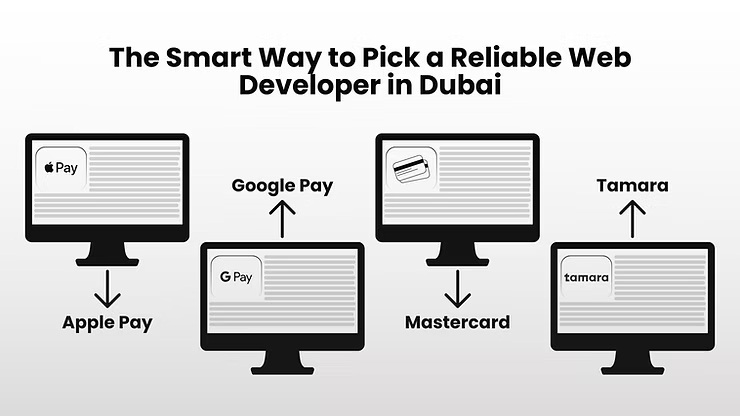
In Dubai and across the UAE, shoppers rely heavily on mobile payments, card payments, and digital wallets like Apple Pay and Google Pay. If your store doesn’t support these methods, you’re likely to lose sales. A good payment gateway doesn’t just process payments. It protects customer data, handles security checks, supports multiple currencies, and keeps your checkout running without issues.
Whether your store is built on Shopify, WooCommerce, Magento, or a custom platform, choosing the right payment gateway is essential. This guide will walk you through everything you need to know, from the top providers in the UAE to the features you should look for and the common challenges businesses face during integration.
What a Payment Gateway Actually Does
A payment gateway is the bridge between your online store and your customers’ bank. It ensures that every transaction is processed safely and quickly. When a shopper checks out, the gateway encrypts their card details, verifies the transaction, and confirms that the payment has gone through.
Beyond processing payments, a gateway also:
Protects your store against fraud
Supports different payment methods
Works across mobile and desktop devices
Creates a smooth checkout experience
Helps build trust with customers
In short, it makes sure you get paid without any complications, and it keeps your customers’ information protected at all times.
The Most Popular Payment Gateways in the UAE
There are several reliable payment gateways used by businesses across the UAE. Each has its strengths, and the best choice depends on your store’s size, budget, and business model.
1. Stripe
A global favourite. Stripe is known for its simple setup, fast processing, and excellent support for Apple Pay and Google Pay. It works smoothly with Shopify, WooCommerce, and custom-built e-commerce websites.
2. PayTabs
A popular choice among UAE businesses. PayTabs supports multiple currencies, flexible pricing, and has strong fraud protection. It integrates well with most e-commerce platforms.
3. Telr
Ideal for small and medium businesses. Telr supports AED payments, recurring billing, and local wallets. It offers easy integration with Shopify, WooCommerce, and Magento.
4. Checkout.com
Powerful and enterprise-friendly. Many large brands use Checkout.com because of its advanced security, fast settlement times, and strong global presence.
5. Amazon Payment Services
Trusted and reliable. Previously known as Payfort, this gateway offers excellent security, instalment options, and support for a wide range of payment methods.
6. Network International
One of the UAE’s most established payment providers. Known for reliability and strong banking partnerships.
7. Tap Payments
A growing regional favourite. Tap supports local cards, mobile wallets, QR payments and works well for businesses selling across GCC countries.
All of these gateways integrate smoothly with Shopify and WooCommerce, making them ideal choices for e-commerce businesses in the UAE.
Key Features Every UAE Online Store Should Look For
Before choosing a payment gateway, make sure it offers the features that matter most to your customers:
Support for AED payments so customers can pay in their local currency
Apple Pay and Google Pay support fast mobile checkouts
Strong fraud protection tools to keep customer data safe
Simple integration with Shopify, WooCommerce, Magento, or custom-built websites
Clear transaction fees without hidden charges
Fast settlement cycles, so you receive your money quickly
Multi-currency support if you sell to customers outside the UAE
Subscription or recurring billing options for monthly services or memberships
Smooth, fast checkout flow that works well on mobile
Choosing a gateway with these features ensures that your store is ready to handle UAE customer expectations.
How Payment Gateway Integration Works (Step-by-Step Guide)
Integrating a payment gateway may sound complicated, but the process is straightforward when broken down into simple steps:
Create your merchant account
Sign up with the payment gateway you prefer. You’ll receive initial login details and instructions.
Complete the KYC and verification process
You’ll need to submit documents such as your trade license, Emirates ID, and bank details. This ensures compliance with UAE regulations.
Get your API keys or install a plugin
For Shopify and WooCommerce, integration usually happens through plugins. For custom websites, developers use API keys to connect the gateway securely.
Configure payment settings
Choose your currency (AED is essential), enable digital wallets, and set up payment methods.
Test the payment process
Gateways offer a sandbox mode to test transactions before going live.
Go live after approval
Once everything is verified, your store can start accepting real payments instantly.
If you’re working with an e-commerce development team, they’ll handle the technical side while ensuring the checkout experience stays smooth and consistent.
Common Challenges UAE Stores Face With Payment Gateways
Even with good gateways, UAE businesses often run into a few common issues:
Card declines due to bank restrictions
Currency mismatch errors during checkout
Lengthy verification or approval timelines
Unsupported countries during international transactions
Slow settlement timelines with certain gateways
Plugin integration issues on Shopify or WooCommerce
Most of these problems have simple solutions, but it helps to choose a gateway with responsive support and a development team familiar with UAE payment systems.
Questions to Ask Before Choosing a Payment Gateway
Before you choose a payment gateway, it helps to ask a few simple but important questions. These answers will give you a clear picture of which provider fits your store’s needs and long-term plans.
What are the transaction fees, and are there any hidden charges?
Does the gateway support my business model and product type?
How fast are payouts and settlement times?
Does it support Apple Pay and Google Pay for mobile shoppers?
Can I accept both local cards and international payments?
Will it integrate smoothly with my platform, whether it’s Shopify, WooCommerce, or a custom-built site?
What level of fraud protection is included?
Is customer support responsive and easy to reach?
These questions help you compare gateways more confidently and choose one that supports your store as it grows.
How Your Checkout Experience Impacts Conversions
Your payment gateway is only part of the equation. The design and performance of your checkout page also have a big impact on whether customers complete their purchase. Even a great payment provider won’t help if the checkout experience feels slow or confusing.
A smooth, user-friendly checkout usually includes:
Fast-loading pages
Clear and simple instructions
Fewer form fields
Trustworthy payment badges
Easy navigation on mobile devices
When your checkout feels effortless, customers are more likely to finish their order. Investing in good UI UX design and strong website speed optimization can make a noticeable difference in your conversion rate.
Final Payment Gateway Checklist for UAE Business Owners
Before your store goes live, it’s worth running through a quick checklist to make sure everything is ready for UAE shoppers:
AED payments are enabled
Apple Pay or Google Pay is activated
All payment methods have been tested in real scenarios
Your fee structure is clear and documented
Fraud protection tools are turned on
The checkout layout works smoothly on mobile
Settlement times have been confirmed with your provider
This final check helps you launch with confidence and ensures your online store delivers a reliable and seamless payment experience right from day one.
Conclusion
Choosing the right payment gateway can make a huge difference to how your e–commerce store performs in the UAE. When your checkout is quick, secure, and simple to use, customers feel more confident and are far more likely to complete their purchase. The goal is to remove friction, build trust, and create a payment experience that feels effortless.
Take your time to compare your options and ask the questions that matter. Look for a provider that supports your business model, offers strong security, and integrates smoothly with your store. A carefully chosen gateway not only makes day-to-day operations easier but also helps you scale as your business grows.
With the right setup, your online store will be better prepared to serve UAE shoppers and expand into new markets with confidence.
Why Website Pricing in Dubai Confuses Most Businesses
If you’ve tried getting website quotes in Dubai, you’ve probably felt overwhelmed. One agency says AED 2,000. Another says AED 30,000. A premium agency quotes AED 60,000. The gap feels unrealistic unless you understand what actually goes into building a website.
The truth is simple: not all websites are the same, and Dubai’s digital market is held to a much higher standard. Consumers here expect premium design, fast loading speed, polished Arabic and English versions and mobile experiences that feel smooth on every device. That’s why agencies offering ecommerce website development in Dubai, Shopify development Dubai, WooCommerce development and UI UX design Dubai charge very different prices depending on the complexity.
This guide breaks everything down clearly. No guesswork. No confusing tech talk. Just a transparent look at what a professional website really costs in Dubai and why those numbers make sense.
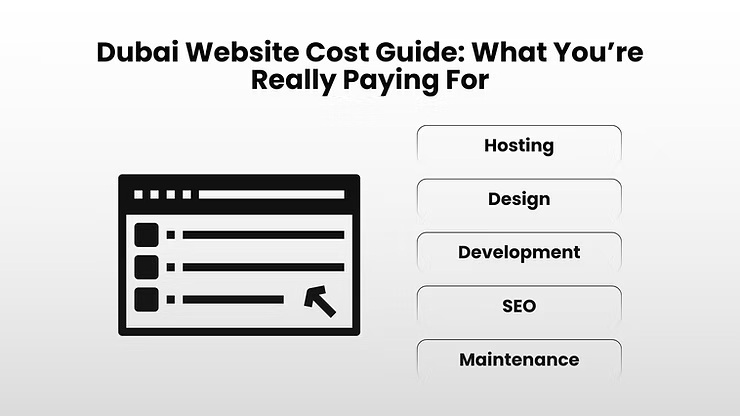
What Actually Affects Website Cost in Dubai?
Before looking at numbers, you need to understand the factors that influence pricing. Two websites can look similar on the surface, but require completely different levels of effort in the backend.
The Core Elements That Shape Your Final Cost
Design Quality: Premium UI/UX design takes time. Cheap templates don’t.
Number of Pages: More pages mean more design, content and testing.
Functionality: Booking systems, product filters, dashboards and custom features all increase the workload.
Platform Choice: WordPress, Shopify, WooCommerce or fully custom development affects cost significantly.
Bilingual Setup: Arabic + English means double design, testing and translation alignment.
Speed Optimisation: Required for Dubai’s fast browsing culture, especially for e-commerce stores.
App, Plugin or API Integrations: Payment gateways, CRM systems, ERP tools, WhatsApp chat and tracking scripts add complexity.
Ongoing Maintenance: Website maintenance AMC Dubai costs vary depending on how many updates your site needs every month.
When you understand these factors, the pricing feels logical instead of random.
Cost Breakdown for Basic Business Websites
Basic websites are perfect for small companies, consultants, clinics, agencies and service providers that need a professional online presence without advanced features.
What Goes Into a Basic Website Build?
A basic package normally includes:
Home, About, Services, Contact
Clean, modern UI design
Mobile responsive layout
Simple animations
WhatsApp and form integrations
Basic SEO setup
CMS setup using WordPress
Dubai Price Range: AED 4,000 – AED 8,500
This is enough for businesses that don’t need e–commerce or custom development.
Cost Breakdown for E-commerce Websites (Shopify, WooCommerce, Custom)
E–commerce websites are more expensive because they need fast performance, secure checkout, product management tools and integrations.
This is where services like Shopify development, WooCommerce development Dubai and ecommerce website development Dubai play a big role.
What Drives E-commerce Pricing Higher?
Product count
Variations and attributes
Inventory management
Payment gateway setup
Shipping logic and delivery rules
Product filters and search
App integrations
Product page design
Checkout optimisation
Speed tuning
Analytics and tracking setups
Dubai Price Range: AED 7,500 – AED 25,000+Advanced ecommerce platforms can go much higher depending on features.
Cost Breakdown for Custom Web Applications
Custom web applications are built when a business needs something beyond a normal website. These projects require planning, wireframes, backend development and extensive testing.
When Do You Need a Custom Solution?
Examples include:
Customer dashboards
Real estate portals
Booking systems
Learning platforms
Marketplaces
Multi-vendor stores
Internal company platforms
Dubai Price Range: AED 20,000 – AED 80,000+
This is ideal for businesses that need advanced functionality or plan to scale aggressively.
The Real Cost of UI/UX Design in Dubai
UI/UX design is one of the biggest factors that separate a cheap website from a premium website. Good UX helps users move smoothly. Good UI makes your brand look polished.
What Goes Into a High-Quality Dubai UI/UX Process?
Research and strategy
Wireframing
User journey mapping
High-fidelity design
Prototypes
Micro-interactions
Design for both Arabic and English
Dubai Price Range: AED 2,000 – AED 12,000 depending on complexity.
Extra Features That Increase Website Cost
Websites get more expensive when you add features that require customisation or deeper integrations.
Popular Add-ons That Increase Cost
Arabic + English bilingual setup
Live chat integrations
Advanced forms
Whatsapp automation
Membership or login portals
SEO setup
ERP/CRM integrations
API development
Blog systems
Custom animations
Speed optimisation
These features are optional but often necessary for Dubai’s competitive market.
Hosting, Domain and Ongoing Maintenance Costs
Most business owners only focus on the upfront website cost, but the yearly cost matters just as much.
What You Pay Every Year
Domain: AED 30 – 80
Hosting: AED 200 – 1,200
Email hosting: AED 150 – 400
Website AMC Dubai: AED 300 – 1,500 per month
Hosting affects speed and security, while AMC ensures your site stays updated, safe and fast.
Hidden Costs Most Businesses Don’t Expect
These are the surprise costs that appear later, especially for e–commerce stores.
Hidden Items That Increase Your Budget
Paid Shopify apps
WooCommerce plugin licenses
Premium themes
Payment gateway fees
Custom coding for issues
Product uploads
Content writing
Stock images
Not all of these apply to every project, but it’s better to be aware early.
Full Pricing Breakdown Table (Dubai Market)
Below is a simple, transparent table that summarises Dubai’s most common website pricing:
Website Type | What’s Included | Estimated Cost (AED) |
Basic Business Website | 4–6 pages, mobile responsive design, forms, WhatsApp, CMS setup | 4,000 – 8,500 |
Professional Corporate Website | Premium UI/UX, animations, bilingual option, advanced forms | 8,500 – 15,000 |
Standard E-commerce Store | Product catalogue, checkout, payment gateway, shipping logic | 7,500 – 25,000 |
Advanced E-commerce / Marketplace | Multi-vendor setup, custom filters, integrations, automation | 25,000 – 60,000+ |
Custom Web Application | Dashboards, portals, booking systems, and multi-user features | 20,000 – 80,000+ |
Monthly Website Maintenance (AMC) | Updates, security, speed checks, backups, fixes | 300 – 1,500 / month |
This table makes it easy to understand the real market standards.
How To Choose the Right Web Development Partner
Choosing the right development partner has a bigger impact than choosing the platform itself. A strong web development company in Dubai will guide you correctly, build a stable product and support you long after the website goes live. A weak partner might deliver something that looks good on the surface but breaks the moment you start growing.
What To Look for in an Agency
Here are the signals that show you’re dealing with a trustworthy and skilled team:
A clean, modern portfolio that shows recent work, not outdated projects.
Ecommerce experience, especially with Shopify, WooCommerce or custom stores.
Strong UI/UX capabilities so your website isn’t just functional but enjoyable to use.
Transparent pricing without unclear add-ons or hidden costs.
Good communication, which saves time and avoids misunderstandings.
Speed optimisation knowledge, crucial for Dubai’s fast-browsing audience.
Clear maintenance options, so your site stays updated and secure long-term.
Experience with bilingual designs, especially Arabic and English layouts.
The right partner doesn’t just build the site. They make sure it performs well, stays secure and supports your business goals for years. A good agency saves you money, time and stress.
How a Bigger Budget Saves You Money Long-Term
It’s tempting to choose the cheapest option when building a website. Many businesses do it. But most cheap websites end up costing much more in the long run. They break easily, load slowly, struggle with SEO and often need to be rebuilt sooner than expected.
Why Cheap Websites Cost More Later
Here’s what usually goes wrong with low-budget builds:
Slow loading speed which kills conversions and makes users leave instantly.
Outdated layouts or cheap themes make your brand look unprofessional.
Weak security increases the risk of hacks, malware or data leaks.
Downtime from cheap hosting affects sales and trust.
Poor UI/UX, which makes it hard for customers to navigate or take action.
A professionally built website uses cleaner code, better design and stronger infrastructure. It requires fewer repairs, performs better and generates more conversions. Investing a little more upfront usually saves businesses thousands later on.
When Custom Solutions Are Worth the Extra Cost
Not all businesses need custom development, but for the right projects, it’s one of the smartest investments you can make. Custom-built websites are designed specifically around your workflows, user needs and long-term growth plan. They don’t rely on generic templates or limited plugins.
When You Should Choose Custom Development
Custom solutions are worth it when:
You’re scaling your e-commerce brand and need more advanced features.
You want to build a marketplace or multi-vendor platform.
You need a customer dashboard, portal or CRM-style system.
You require advanced booking, filtering or automation.
You operate in multiple languages or regions, especially Arabic and English.
You expect high traffic and need a system that remains fast and stable.
A custom website gives you full control over design and functionality. You’re not limited by templates or third-party restrictions. It’s the ideal choice for businesses that want to stand out, grow faster and offer a personalised user experience.
Conclusion
A well-built website is one of the strongest assets a business can have in Dubai’s fast-moving digital market. It shapes how customers see your brand, how easily they can interact with your services and how confidently they decide to buy or enquire. When your website is fast, modern and thoughtfully designed, it builds trust before a single conversation even begins.
Understanding the real cost of a website helps you make smarter decisions. Cheap websites may look fine at first, but they often hide problems that show up later slow performance, broken features, security issues or outdated designs that hurt your credibility. A professional build, combined with strong UI/UX, clean code and regular maintenance, delivers long-term stability and better results.
Think of your website as a long-term investment. A reliable foundation reduces repair costs, supports future growth and gives your customers a smooth experience every time they visit. In a competitive market like Dubai, quality isn’t optional. It’s what sets your business apart and keeps customers coming back.
Why Building a Secure, Compliant Healthcare Website in Dubai Needs More Than Just Good Design
Healthcare in Dubai has become more digital than ever. Patients are booking appointments online, checking doctor profiles, comparing clinics, and reading reviews before they even step into a facility. This shift means a healthcare website is no longer a simple brochure it’s the first place patients judge your credibility, professionalism, and trustworthiness.
But unlike regular business websites, healthcare platforms must follow strict rules. They handle sensitive data, appointment requests, medical questions, and often payments. Dubai’s regulations and patient expectations are high, so a healthcare website has to balance three important elements: strong security, full compliance, and a smooth patient experience.
A typical template website isn’t built for this level of responsibility. Clinics, hospitals, dental centres, therapy clinics, and wellness facilities need a digital presence that meets healthcare standards and delivers comfort, clarity, and trust. This guide breaks down exactly how Dubai healthcare firms can build websites that are secure, compliant, and genuinely helpful for patients.
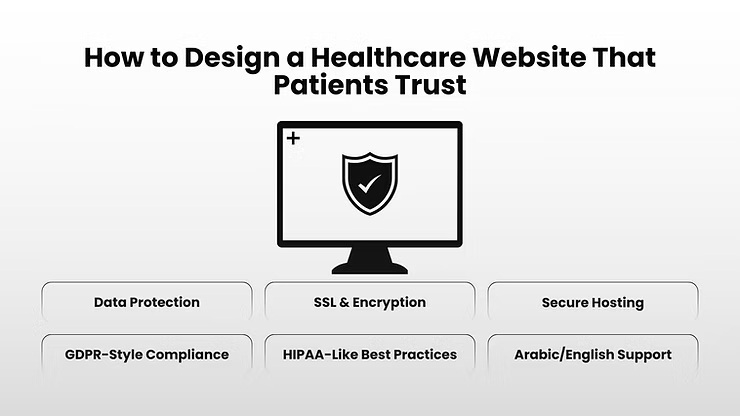
Understanding the Dubai Healthcare Digital Landscape
Dubai has embraced digital healthcare faster than most cities. Patients don’t want to wait in call queues or visit clinics just to get basic information. They expect websites to help them book appointments, learn about treatments, check doctor availability, and understand costs, all without friction. At the same time, healthcare authorities like DHA and MOHAP expect clinics and hospitals to meet strict standards that protect patient data and ensure medical information is accurate and transparent.
To operate safely and confidently online, healthcare firms must follow essential rules such as:
Protecting patient data according to local privacy regulations
Ensuring all medical content meets DHA/MOHAP guidelines
Displaying clear information about pricing, policies, and services
Handling appointment requests and inquiries securely
Collecting proper consent for forms, WhatsApp reminders, and newsletters
A healthcare website in Dubai is more than a digital brochure it’s a trust-building tool. When compliance, security, and accuracy come together, patients feel safer choosing your clinic or hospital even before their first visit.
If your website feels outdated or hard to use, we can redesign it with a patient-first experience.
What a Healthcare Website in Dubai Must Do
A beautiful website means nothing if patients can’t find what they need or feel unsure about the information. Healthcare websites in Dubai must guide visitors smoothly, reassure them, and make it easy to take action. Every page should reduce confusion, not add to it.
A strong healthcare website should:
Make booking simple: clear buttons, fewer clicks, fast-loading forms
Share accurate medical details: written in patient-friendly language
Show complete doctor profiles: photos, years of experience, languages, specialties
Load quickly: especially on mobile, where most searches happen
Build trust immediately: insurance partners, awards, certifications, reviews
Focus on mobile-first layouts: many patients search while on the go
Offer easy access to contact and location info without scrolling endlessly
People visiting healthcare sites often feel anxious or unsure. A clean, well-structured design helps them feel calm and confident, and that comfort leads to more appointments.
Compliance First: The Foundation of Every Dubai Healthcare Website
Compliance is not an optional checkbox in Dubai’s healthcare sector it’s the foundation that protects both the clinic and the patient. A non-compliant website exposes a medical business to risks like data breaches, incorrect medical information, and regulatory penalties.
Key compliance areas include:
Patient consent: Every form, from appointments to WhatsApp requests, must collect clear consent.
Data handling: Sensitive information should never sit in emails, unencrypted spreadsheets, or personal mobile devices.
Accurate medical content: All service descriptions, claims, and doctor details must follow DHA/MOHAP rules.
Updated doctor listings: Qualifications, specialties, and licensing must be kept current.
Transparent pricing: Some services may require upfront pricing clarity.
Secure forms: Appointment and inquiry forms must never submit data in plain text.
Role-based access control: Staff should only access the data necessary for their role.
Ignoring compliance doesn’t just create technical problems. It damages the clinic’s reputation and instantly breaks patient trust, something very difficult to rebuild.
Want a website built with DHA and MOHAP compliance from day one? We can guide you through the entire process.
Security Essentials Healthcare Websites Can’t Ignore
Healthcare websites carry some of the most sensitive information a business can handle: names, medical concerns, IDs, appointment details, and sometimes even uploaded documents. That makes them a prime target for cyber threats.
Every healthcare website should have:
SSL encryption to secure every page
Encrypted forms so patient messages aren’t exposed
High-quality hosting instead of crowded, unsafe shared servers
Daily backups to recover quickly after any issue
A firewall (WAF) to block hacking attempts automatically
Malware scanning that runs in the background
Two-factor authentication (2FA) for admin accounts
Access control so only the right staff see sensitive information
Dubai doesn’t require HIPAA compliance, but adopting HIPAA-like practices creates a stronger foundation for patient safety and builds a sense of trust from the very first click.
Patient-Friendly UX: Designing for Trust, Clarity & Comfort
Patients usually visit a clinic’s website because they’re worried about a symptom, comparing doctors, or looking for reassurance. Your website should help them feel guided, not overwhelmed.
A patient-first website prioritizes:
Clean, simple navigation that avoids confusion
A clear booking button that appears throughout the site
Complete doctor profiles that help patients choose with confidence
Service pages written in simple language without heavy medical terms
Mobile-first layouts that adapt perfectly to small screens
Fast loading speed because anxious patients won’t wait
English and Arabic options to serve Dubai’s diverse audience
Accessible design for older patients or those with visual needs
Great healthcare UX feels calm, professional, and supportive, much like a good clinic experience.
Need features like online booking, telehealth, doctor directories, or insurance panels? We can build them for you.
Essential Features Every Dubai Healthcare Website Should Include
A healthcare website becomes truly effective when it supports patients at every stage research, decision-making, booking, and follow-up.
Important features include:
Online appointment booking system
Doctor schedules and availability
Insurance panel list to help patients check coverage
Telehealth or video consultation options
WhatsApp chat or live support
Clinic locations with embedded maps
Transparent pricing (where allowed)
Verified patient reviews
A helpful FAQ section
A blog with health tips or updates
Emergency contact information
Department pages for each speciality
These elements reduce the workload on reception teams and make the patient feel supported even before they arrive at the clinic.
Why WordPress Isn’t Enough for Growing Healthcare Firms
WordPress works for basic business websites, but healthcare has higher demands. The more a clinic grows, the more WordPress starts to struggle.
Here’s where WordPress falls short for medical centres:
Too many plugins create heavy, slow websites
Templates restrict patient journey customization
Security relies on third-party plugins
Encrypted data flows are harder to manage
Compliance features require multiple add-ons
Appointment systems become complex and unstable
Scaling becomes difficult as patient volume increases
If your clinic depends on online bookings, automated patient reminders, telemedicine, or multi-location services, WordPress can limit your growth.
If WordPress feels limiting, we can rebuild your website with a custom, scalable healthcare system.
When Custom Development Makes More Sense for Healthcare Providers
Custom development gives healthcare firms the freedom to build exactly what they need without relying on external plugins or themes. It’s especially useful for clinics and hospitals that want a system tailored to how their operations actually work.
Custom websites are ideal when you need:
Patient dashboards
Staff dashboards
Integrated appointment systems
Telemedicine portals
Insurance verification workflows
Automated appointment reminders
Department-specific content management
Integration with EMR or patient record systems
Doctor filtering by speciality, availability, or location
With custom development, every part of the website, from admin access to patient flow, can be built cleanly and securely, without plugin limitations or performance issues.
Cost Breakdown: WordPress vs Custom Development for Healthcare
Here’s a simple and realistic comparison:
Feature | WordPress | Custom Development |
Security | Medium | Strong |
Compliance | Plugin-dependent | Built-in from day one |
Speed | Depends on theme/plugins | Fully optimized |
Patient UX | Template limited | Designed for patients |
Scalability | Low–Medium | High |
Long-Term Cost | Medium–High | Stable |
Initial Cost | Low–Medium | Medium–High |
WordPress feels cheaper in the beginning, but as clinics grow, the cost of fixing slow speed, plugin conflicts, or broken appointments adds up. Custom development costs more upfront, but creates long-term stability and fewer rebuilds.
If you want a team that handles everything end-to-end, we can help you build it properly from day one.
Step-by-Step Roadmap to Build a Compliant Healthcare Website in Dubai
Building a healthcare website in Dubai isn’t something you rush. It needs to follow a clear process that balances design, usability, security, and full compliance with DHA and MOHAP rules. Here’s a roadmap that healthcare clinics, hospitals, and medical centres can rely on.
1. Discovery & Compliance Review
Start by understanding exactly what your website must follow. This includes DHA/MOHAP content rules, consent requirements, data protection policies, and the level of online services your clinic wants to offer. Clear requirements early on prevent costly fixes later.
2. Patient Journey Mapping
Before any design work, map the patient’s journey. How do they search for a doctor? What information do they want first? What stops them from booking? Designing around real patient behaviour makes your website far more effective.
3. UI/UX Design
This stage focuses on creating a clean, calm, trustworthy design. The layout should reduce confusion, highlight your services, and make booking obvious. Everything should feel simple, supportive, and mobile-friendly.
4. Secure Development
This is where the technical foundation is built. Forms must be encrypted, hosting must be secure, and admin access must be controlled. Every feature from online booking to doctor profiles should be coded with patient safety and performance in mind.
5. Feature Development
Essential features like appointment booking, doctor directories, telehealth, insurance filters, and chat support are added here. Each feature should be built with accuracy, security, and ease of use in mind.
6. Testing & Quality Assurance
Before launching, the website must be tested across multiple devices and browsers. Testing covers mobile experience, loading speed, security checks, form submissions, broken links, and general stability. Healthcare websites cannot afford glitches.
7. Compliance Verification
Every page, form, claim, image, and doctor profile must be reviewed to make sure it aligns with DHA/MOHAP guidelines. This is a crucial step that protects your clinic from avoidable penalties or trust issues.
8. Launch & Monitoring
The launch should be smooth, supported by monitoring tools that track uptime, speed, and potential security threats. Patients should experience a seamless transition from old systems to the new website.
9. Ongoing Maintenance
Healthcare websites require monthly care updates, backups, security scans, content corrections, and performance improvements. Proper maintenance keeps the website fast, safe, and reliable all year long.
Conclusion
Trust is everything in Dubai’s healthcare sector. Patients want clear information, easy access to doctors, and the reassurance that their data is safe. A website built with strong security, proper compliance, and a smooth patient experience sends that message instantly.
Whether you run a small clinic or a large hospital group, the right digital foundation makes daily operations easier. Bookings flow better, communication improves, and patients feel more confident choosing your services. A well-built website becomes an extension of your care, not just a marketing tool.
When your site is secure, compliant, and designed around your patients, you earn trust before they even walk in the door. And in Dubai’s competitive healthcare market, that trust is what drives real growth.
If you’re ready to build a healthcare website that patients trust, we’re here to guide you.
The Hidden Price of Choosing a Cheap App Developer
A low-priced app might look like a great deal at first, but the real cost shows up later slow performance, constant bugs, missing features, poor design, and expensive fixes you never planned for. Many businesses choose the cheapest option to save money, only to discover that the app can’t scale, doesn’t work smoothly, and needs major repairs within months.
Cheap development often skips the basics that make an app stable: proper planning, clean code, strong backend structure, security, and testing. Without these foundations, the app may “work” at launch, but it quickly becomes a problem the moment users increase or new features are needed.
This blog breaks down why cheap app development ends up costing far more in the long run and how choosing quality from the start protects your time, money, and reputation.
The Real Cost of a Low Cost App
There’s a big difference between “price” and “cost.” The price is what you pay upfront. The cost is what you end up paying over time in fixes, redesigns, rebuilds, and lost users.
Cheap app development usually means cutting corners everywhere: architecture, security, design, testing, and maintenance. Instead of planning for long-term growth, the project becomes a quick job focused only on completing the basics. And although the app may seem fine when delivered, the problems begin as soon as users start interacting with it.
Loading issues, broken features, unstable servers, and outdated UI quickly appear. What seemed like savings becomes a piling list of hidden costs. In many cases, businesses end up spending two to three times more to repair or rebuild the app than they would have spent on quality development from the beginning.
A cheap app may cost less today, but it costs a lot more tomorrow.
Common Problems With Low Cost App Development
Cheap app development often leads to predictable issues that show up within weeks or months of launch. Here are the most common problems:
Poor Code Quality
Low-cost development often means rushed coding with no structure. Messy code makes the app slow, unstable, and difficult to improve later. Adding new features becomes expensive because everything breaks easily.
No Proper UI/UX Design
Cheap apps skip real design work. Screens feel outdated, buttons aren’t placed properly, and the user flow doesn’t make sense. This results in low engagement, higher bounce rates, and poor reviews.
Weak Backend Structure
A fragile backend means the app can’t handle growing users, heavy tasks, or real-time data. As soon as traffic increases, the app starts crashing or slowing down.
Missing Security Standards
Cheap development rarely includes encryption, secure APIs, or proper data handling. This puts user data at risk and can even cause legal problems in industries like healthcare, finance, and e-commerce.
Little to No Testing
Testing takes time, and cheap developers skip it. Bugs go unnoticed. Features break randomly. Users face errors that should have been caught during development.
No Scalability for the Future
Cheap apps are built just to “work” at the moment. They don’t prepare for future features, user growth, or updates. As soon as you try to scale the app, everything starts falling apart.
These issues don’t appear because the developer is bad. They appear because the budget doesn’t allow time for the right planning, right coding, and right quality checks.
The Hidden Costs You Don’t See at First
Cheap app development looks affordable because the initial quote is low. But what you don’t see upfront are the hidden costs that show up later:
Fixing Bugs Constantly
Bugs that should have been prevented end up needing weekly fixes, increasing both time and cost.
Rebuilding Core Features
Poorly designed features need to be rebuilt from scratch when the app starts breaking.
Server & Stability Issues
Weak hosting setups cause crashes, downtime, and slow performance — all of which cost extra to resolve.
UI Redesigns
Bad design means low engagement. Eventually, you have to invest in a full redesign.
Lost Users & Poor Ratings
Slow performance or bugs make users uninstall the app quickly. Recovering trust later becomes expensive.
Downtime Costs
Every hour the app is down can mean lost customers and damaged credibility.
These hidden costs are usually much more than the money “saved” by choosing a cheap developer. By the time all these issues are fixed, the total cost becomes far higher than a well-built app would have cost in the first place.
Why Low Cost Apps Fail to Scale
Scaling is one of the biggest challenges for apps built on small budgets. Cheap development focuses only on basic functionality, not growth. As soon as your user base increases or you try to add new features, problems start appearing.
A cheap app usually lacks:
A scalable backend
Clean and extendable code
Proper database design
Efficient APIs
Strong security layers
Performance-optimized architecture
Without these foundations, the app struggles to grow. You might notice slow loading, failed requests, or features breaking when traffic rises. In worst cases, developers tell you that adding new features is impossible unless the entire app is rebuilt.
A scalable app isn’t about adding more servers. It’s about smart planning, clean structure, and quality engineering, all things that cheap development typically skips.
How Bad Performance Affects Your Business
App performance plays a direct role in how people see your brand. When an app is slow, freezes, or crashes at the wrong moment, users don’t wait, they close it and move on. In competitive industries, that often means losing them to a faster, more polished alternative.
Poor performance creates a ripple effect across your entire business:
Fewer downloads
Low user retention
Negative reviews on app stores
Higher uninstall rates
Drop in conversions and revenue
Loss of trust in your brand
Even if your app idea is strong, users judge it by how it performs on their device. A slow or buggy app feels unprofessional, and that impression transfers directly to your company.
High performance isn’t just a nice-to-have. It’s the base of a good user experience. When the app feels quick and reliable, people stay longer, engage more, and are far more likely to return.
How Quality Development Saves Money Long-Term
Investing in quality development may seem expensive at first, but it actually saves far more money over the life of your app. When an app is built properly from day one, it avoids the constant cycle of bugs, fixes, rebuilds, and downtime that cheap development usually brings. A well-built app becomes an asset, not a recurring cost.
Clean, Structured Code
Clean code is easier to manage, update, and scale. Developers can add new features without breaking existing ones, which reduces your long-term development expenses.
Stronger UI/UX
Good design improves engagement and user satisfaction. When users enjoy using your app, you avoid costly redesigns and increase conversions naturally.
Stable Backend
A strong backend can handle more users and heavier tasks without crashing. This reduces support tickets, downtime, and emergency fixes.
Built for Scalability
Quality development prepares your app for growth. You can introduce new features, expand user capacity, or upgrade systems without rebuilding the entire app.
Lower Maintenance Costs
Well-planned apps have fewer bugs, cleaner logic, and stronger architecture, which means less money spent on constant repairs.
Better Security
Secure development prevents data leaks, vulnerabilities, and costly compliance issues. Avoiding a security failure alone can save a business thousands.
In the long run, quality development costs less because you’re not paying repeatedly for fixes. You invest once in a strong foundation and avoid the endless expenses that come with a poorly built app.
Signs You Need to Fix or Rebuild a Cheap App
If your app was built on a tight budget, the warning signs usually start showing up fast, sometimes so slowly that you don’t realize the real problem until users begin complaining. Cheap development shortcuts eventually surface, and when they do, they affect everything from performance to user trust.
Here are the clearest signs your app needs a serious fix or a full rebuild:
Frequent crashes or sudden freezes
Slow loading screens that frustrate users
Constant complaints about bugs or broken features
Struggle to add new features without breaking old ones
The developer refuses or is unable to make updates
Security warnings, data issues, or unstable APIs
An outdated UI that feels disconnected or confusing
Errors and downtime when traffic increases
These issues don’t go away on their own. In fact, they usually get worse as more users join or new updates roll out. If you’re seeing two or more of these signs, it’s a clear signal that your app needs structured optimization or a complete rebuild to protect your investment.
Why Businesses Choose DOT IT for Reliable App Development
Businesses choose DOT IT because they want an app that’s built properly, not rushed, not patched together, and not something that will fall apart in six months. We focus on quality from the very first step, making sure your app is fast, stable, secure, and ready for real growth. Our approach looks at the full picture, not just the surface.
Here’s what sets us apart:
Clean, maintainable code that’s easy to update and scale
A strong backend foundation built to handle real traffic and complex features
Thoughtful UI/UX design that keeps users engaged and improves conversions
Scalable planning so you can add new features without rebuilding the whole app
Proper testing and QA to catch issues before they reach your users
Clear communication throughout the entire project
Long-term support to keep your app updated, fast, and secure
When you work with DOT IT, you’re not just getting an app, you’re getting a product that grows with your business. Whether you’re starting fresh, rebuilding a low-quality app, or fixing major performance issues, we deliver solutions that feel modern, reliable, and built for the future.
Conclusion
Choosing a cheap development option can feel tempting when you’re trying to save money, but the true cost shows up later in broken features, slow performance, unhappy users, and expensive rebuilds. What looks like a small “upfront saving” often turns into months of repairs, lost revenue, and damage to your brand. A high-quality app requires thoughtful planning, clean code, a strong backend, proper testing, and a team that understands long-term growth. These are the foundations that cheap development simply doesn’t include.
When you invest in quality from the beginning, you avoid the endless cycle of fixes and create an app that performs well, scales easily, and keeps users coming back. A well-built app becomes an asset: it supports your business, strengthens your reputation, and helps you grow without technical limitations.
If your current app feels slow, outdated, or hard to improve, this is the right moment to rebuild it the proper way. The sooner you fix the foundation, the sooner your app can start delivering the experience your users expect and the results your business deserves.
Why Healthcare Apps Are Critical for UAE Clinics
The UAE healthcare sector is evolving rapidly, and patients now expect instant, convenient access to medical services through their mobile devices. Traditional appointment systems and in-person consultations are no longer enough. Clinics that invest in well-designed healthcare apps gain a competitive edge by providing patients with speed, convenience, and reliability.
In Healthcare App Development in the UAE, apps are not just digital brochures they allow patients to book appointments, consult doctors remotely, access medical records, receive notifications, and manage payments securely. A well-planned, high-performing app ensures clinics meet patient expectations, improve engagement, and streamline daily operations.
By combining essential functionalities with advanced features like telemedicine, AI-driven health recommendations, and secure data handling, clinics in the UAE can transform patient experience. A healthcare app is no longer just a service tool it’s a strategic asset that drives growth and trust.

Key Challenges in Healthcare App Development UAE
Developing a healthcare app in the UAE comes with unique challenges that clinics must address to deliver a high-quality, compliant product:
1. Data Privacy & Compliance
Must comply with UAE healthcare regulations and international standards like HIPAA.
Patient data must be encrypted and securely stored.
2. Diverse Patient Needs
Multi-language support is essential for the UAE’s diverse population.
Accessibility features improve usability for all patients.
3. Integration Requirements
Apps need to integrate with clinic management systems, EMRs, pharmacy networks, and payment gateways.
4. Trust & Security
Sensitive medical data requires top-tier authentication and secure access.
Patients must feel confident sharing personal health information.
5. Competition & Expectations
Clinics must offer superior UX, speed, and features to compete in a crowded market.
Understanding these challenges helps clinics build apps that are functional, secure, and scalable for the UAE healthcare environment.
Must-Have Features for Healthcare Apps
A healthcare app in the UAE needs features that enhance patient convenience and improve clinic efficiency.
Appointment Scheduling & Reminders
Patients can book, reschedule, or cancel appointments instantly. Automated reminders reduce no-shows.
Telemedicine & Video Consultations
Offers remote consultations, saving time for both patients and doctors while ensuring continuity of care.
Patient Records & History
Secure access to medical records, lab results, and treatment history improves patient management.
Prescription & Pharmacy Integration
Simplifies prescription handling and enables seamless medicine delivery.
Notifications & Health Alerts
Push notifications keep patients updated about appointments, medications, or wellness tips.
Payment & Billing Solutions
Provides secure and convenient in-app payment options for consultations or treatments.
Including these features ensures the app meets patient expectations while streamlining clinic operations and enhancing trust.
Advanced Features That Set Healthcare Apps Apart
To truly stand out in the competitive UAE healthcare market, clinics can integrate advanced features that go beyond basic functionality. These tools not only improve usability but also enhance patient engagement and overall satisfaction.
AI Symptom Checker:
Helps patients perform preliminary assessments by analyzing symptoms and providing guidance on next steps. This reduces unnecessary clinic visits while giving patients peace of mind.
Personalized Health Plans:
Offers customized wellness or treatment plans based on patient history, preferences, and health goals. Tailored plans increase engagement, adherence, and patient trust.
Wearable Device Integration:
Syncs data from smartwatches, fitness trackers, or medical devices directly to the app. This allows both patients and clinicians to monitor health metrics continuously for better-informed decisions.
Analytics Dashboard for Clinics:
Provides insights into appointments, patient behaviour, engagement patterns, and trends. Clinics can use this data to optimize operations, improve services, and make data-driven decisions.
Multi-Language Support:
UAE’s population is diverse, and apps that support multiple languages ensure accessibility for a wider audience. This improves adoption, retention, and overall satisfaction.
By incorporating these advanced features, healthcare apps not only offer enhanced functionality but also create a more engaging and efficient experience for patients and clinics alike. Clinics investing in these tools demonstrate innovation, build trust, and stay ahead in Healthcare App Development in the UAE.
UX/UI Best Practices for Healthcare Apps
The success of a healthcare app largely depends on how easily patients can navigate and use it. A clean, intuitive design not only improves user experience but also increases engagement, retention, and overall trust in the clinic.
Clean, Intuitive Design:
Minimalist and organized interfaces reduce confusion, helping patients find information quickly and navigate the app seamlessly.
Responsive Layouts:
The app must work flawlessly across all devices, including smartphones, tablets, and different screen sizes, ensuring consistent usability.
Interactive Elements:
Features like user-friendly forms, filters, swipe gestures, and buttons enhance engagement and make tasks such as booking appointments or viewing records easier and faster.
Quick Onboarding:
First impressions matter. Simple tutorials, guided tours, or walkthroughs help patients understand the app’s benefits immediately, reducing drop-offs.
Consistent Branding:
Using consistent colours, fonts, and visual elements reinforces the clinic’s identity, builds trust, and enhances credibility.
Well-designed UX/UI ensures patients can interact with the app efficiently and enjoyably. For Healthcare App Development in the UAE, focusing on usability and visual clarity is essential to keep patients engaged, encourage repeat use, and improve overall satisfaction.
Backend & Technology Considerations
A strong backend is the foundation of any healthcare app. It ensures reliability, scalability, and data security, which are critical for clinics managing sensitive patient information and high traffic.
Key Backend Components:
Scalable Server Architecture:
Supports growing patient numbers and increasing medical data without slowing down the app.
Fast APIs:
Enable real-time updates, smooth navigation, and instant access to records, appointments, or consultations.
Cloud Storage:
Securely stores medical documents, images, and videos while allowing easy retrieval for patients and staff.
Data Protection & Security:
Encryption, secure login, and authentication prevent unauthorized access and protect sensitive patient data.
Integration Capabilities:
Seamlessly connects with EMRs, pharmacy systems, and payment gateways to streamline clinic operations.
Investing in a robust backend ensures that your healthcare app remains reliable, fast, and secure even during peak usage, a critical factor for successful Healthcare App Development in the UAE.
Marketing & App Store Strategy
Even the most feature-rich healthcare app needs visibility to succeed. A strategic marketing approach ensures clinics reach the right audience and maximize app adoption.
Effective Marketing Strategies for UAE Healthcare Apps:
App Store Optimization (ASO):
Use relevant keywords, clear descriptions, and compelling screenshots to improve app discoverability.
Social Media Campaigns:
Promote features, health tips, and clinic updates on platforms like Instagram, Facebook, and LinkedIn to engage patients.
Push Notifications:
Send timely reminders for appointments, medication schedules, or new services to keep users engaged.
Influencer & Community Outreach:
Collaborate with local health influencers or community pages to boost credibility and reach.
Email & Content Marketing:
Share newsletters, updates, and educational content to nurture patient relationships and encourage app usage.
A well-planned marketing and ASO strategy ensures that your healthcare app not only functions effectively but also reaches and retains the right users in the competitive UAE healthcare market.
Why Clinics Trust DOT IT for Healthcare App Development in the UAE
Clinics across the UAE rely on DOT IT for Healthcare App Development in the UAE because we combine deep technology expertise with practical industry insights. Our approach ensures every app is not only functional but also scalable, secure, and user-friendly.
Why DOT IT is the Trusted Choice:
Scalable Architecture
We design apps that can handle high patient volumes, large medical databases, and peak traffic without slowing down.
Clean Code & UX/UI
Our team delivers intuitive, user-friendly interfaces that enhance patient engagement and make clinic workflows smoother.
Secure Backends
We implement strong encryption, secure login, and authentication protocols to protect sensitive patient and payment data.
ASO & Launch Support
From keyword optimization to compelling screenshots and descriptions, we ensure your app reaches the right audience and gains visibility.
Ongoing Updates & Maintenance
Post-launch support keeps the app functional, secure, and up-to-date with the latest features and improvements.
With DOT IT, clinics don’t just get an app they get a reliable, scalable, and growth-ready platform that enhances patient experience, boosts operational efficiency, and drives long-term success in Healthcare App Development in the UAE.
Conclusion: Building a Healthcare App That Patients Trust
Launching a successful healthcare app in the UAE goes beyond just adding features. It requires a thoughtful combination of essential functionalities, advanced tools, intuitive UX/UI, and a secure, scalable backend. Every step from planning and development to launch and marketing plays a critical role in ensuring patient engagement and satisfaction.
Investing in Healthcare App Development in the UAE allows clinics to provide faster services, better communication, and safer access to patient data. Apps with well-designed features, smooth navigation, and strong security build trust and encourage repeated use.
Partnering with an experienced team like DOT IT ensures that your healthcare app is reliable, scalable, and ready for growth. With the right planning, technology, and support, your app can enhance patient experience, improve operational efficiency, and position your clinic as a leader in Dubai’s competitive healthcare market.
Why Beautiful Shopify Stores Fail: The Real Shopify E-Commerce Problems
Shopify makes launching a store easier than ever, but that’s exactly why so many stores end up struggling. Anyone can set up a theme, upload a few products, and hit publish. The real challenge starts after launch, when traffic is low, sales barely come in, and customers leave without buying. These early struggles are the first signs of deeper Shopify e-commerce problems that many store owners overlook.
It feels frustrating because the store looks fine on the outside. But behind the scenes, issues like weak product pages, slow speed, missing SEO, and confusing layouts quietly stop your store from converting.
The truth is simple: Shopify stores don’t fail because the platform is bad. They fail because the essentials that make a store profitable get ignored. This blog breaks down exactly why that happens and how you can fix the most common e-commerce problems holding your store back.

Why Businesses Choose Shopify (And Why It Feels So Promising at First)
People love Shopify because it removes all the hard parts of starting an online store. No complicated setup. No custom coding. No long development process. You pick a theme, add your products, and you’re ready to sell. It feels fast, simple, and empowering.
Shopify also gives you everything in one place: payments, checkout, apps, shipping, inventory, and customer tools. For new brands, this convenience feels like a huge advantage. You can go from idea to online store in a weekend.
But this simplicity can hide a big truth: launching a store is easy, growing one is not. You need tuned themes, strong product pages, and traffic sources beyond ads. Without these, every Shopify store eventually hits a wall. A structured upgrade using our Shopify development solutions
Where Shopify Stores Start Falling Apart (The Hidden Problems No One Talks About)
Most Shopify stores break down for the same reasons, and it usually happens slowly. First, product pages feel empty or unclear. Then the theme starts getting packed with apps that slow down loading. Mobile layouts look messy, SEO is missing, and suddenly the store becomes hard to find and even harder to trust.
Many store owners focus only on running ads. When those ads stop performing, everything else collapses because there’s no organic traffic, no brand story, and no strong conversion flow to keep sales steady.
These issues aren’t dramatic at first. They build quietly in the background until the store stops growing. But the good news is that once you understand what goes wrong, fixing these problems becomes much easier, and your store can start performing the way you hoped from the beginning.
The 10 Biggest Reasons Shopify Stores Fail
Mistake 1. Product Pages That Don’t Answer Real Customer Questions
Most Shopify stores fail right on the product page. The page looks “okay,” but it doesn’t actually help customers make a decision. Shoppers land on it, scroll for a few seconds, and leave because nothing convinces them to trust the product.
You often see:
Very short descriptions
One or two basic photos
No clear benefits
No real explanation of how the product helps
No sizing, materials, or usage details
Weak storytelling
People don’t buy when they feel unsure. And a vague product page creates uncertainty.
Great product pages do the opposite. They give clarity. They explain the value. They show real photos, real results, and real benefits. When customers understand exactly what they’re getting, conversions increase instantly.
If your product pages aren’t built to answer buying questions, your traffic will never convert, no matter how good your ads are.
Mistake 2. Slow Store Speed Caused by Heavy Themes and Too Many Apps
A slow Shopify store loses customers before it even gets a chance to sell. Most visitors won’t wait more than two seconds for a page to load. And many Shopify stores break that limit easily.
The biggest reason? Themes loaded with features you don’t need and apps that run in the background even when you’re not using them.
A slow store feels untrustworthy. Images load late, buttons respond slowly, and the whole experience feels outdated. When customers feel that friction, they click away.
Small fixes create big results:
Remove apps you don’t use
Cut down heavy sliders and banners
Compress your images
Use a lighter theme or clean up your current one
A fast store doesn’t just improve conversions, it improves SEO, ad performance, and overall customer trust.
Mistake 3. Poor Mobile Experience That Pushes Shoppers Away
More than half of online shopping happens on phones, but many Shopify stores still look like they were only designed for desktop. Buttons overlap, text becomes tiny, images stretch weirdly, and the checkout feels cramped.
When mobile feels uncomfortable, people leave fast.
Common red flags:
Hard-to-tap buttons
Long pages with no structure
Cluttered layouts
Slow loading on mobile networks
Missing sticky add-to-cart button
Text that’s too small to read
If your store works well only on desktop, you’re losing the majority of your potential customers.
A clean mobile experience feels simple:
Clear product info, quick add-to-cart, easy navigation, and fast loading. When mobile feels smooth, sales go up sometimes dramatically.
Mistake 4. No Real Brand Story or Trust Signals
A lot of Shopify stores fail because they feel generic. Customers don’t know who they’re buying from, why the brand exists, or whether the business is real. Without trust, even the best product struggles to sell.
Most stores skip simple trust-building elements like:
Clear About Us page
Real team photos
Social proof
Customer reviews
Guarantees or return policies
Authentic brand story
Shoppers want to feel safe before giving you their money. If the store feels faceless, they hesitate.
A strong brand story shows people why your product exists and why they should trust you. Add real photos, share your mission, display reviews, and show proof that you deliver. Trust sells not just design.
Mistake 5. Relying Only on Ads With No Organic Traffic Plan
Many Shopify owners depend entirely on paid ads. When ads work, the store feels alive. When ad costs rise or performance drops, sales crash overnight.
A store without organic traffic is always one algorithm change away from disaster.
Here’s what’s usually missing:
SEO-optimized product pages
Blog content targeting keywords
Email marketing
SMS flows
Social media presence
Repeat customer strategy
Ads should be fuel, not the engine. A stable Shopify store pulls traffic from many sources paid, organic, social, referrals, and returning customers. You can support that growth with solid technical groundwork through our Shopify development solutions.
Mistake 6. Complicated Navigation That Makes Products Hard to Find
If customers can’t find what they want fast, they leave. Simple as that. A lot of Shopify stores turn navigation into a puzzle with too many menu items, confusing categories, or hidden pages that matter.
Common issues include:
Long dropdown menus
Products buried in sub-categories
No clearly featured collection
No search bar
Irrelevant items in the main menu
Shoppers want clarity, not adventure.
Good navigation feels effortless. You guide the customer, not overwhelm them. Put your best products upfront, keep the menu clean, and make sure shoppers can find the right product in just a few clicks.
When navigation feels smooth, conversion rates improve immediately.
Mistake 7. Weak SEO Setup That Makes Your Store Invisible on Google
Many Shopify stores struggle not because the products are bad, but because no one can find them. Poor SEO is one of the biggest silent killers of e-commerce growth.
Most stores launch with:
No keyword-focused product titles
Meta descriptions left blank
Thin or duplicated descriptions
Missing alt text on product photos
Weak internal linking
Slow pages that hurt rankings
If Google can’t understand your store, customers won’t find it, no matter how beautiful your theme is.
Good SEO doesn’t require complicated strategies. Start with clean product titles, clear descriptions, optimized images, and fast loading. When those basics are right, traffic grows naturally and your ad costs drop.
Mistake 8. Checkout Friction That Pushes Shoppers Away
A lot of Shopify stores lose customers at the very last step, checkout. People add items to the cart, but something in the process makes them leave before paying.
Common checkout killers include:
Unexpected shipping fees
Too many form fields
Slow payment loading
No guest checkout
Missing trust badges
Complicated coupon fields
Your checkout should feel quick and safe. Shopify already gives you a strong checkout system, but you still need to remove friction around it. Be transparent with prices, simplify the form, keep it fast, and show reassurance like secure payment icons or money-back guarantees.
A smooth checkout can boost your conversion rate more than any design tweak on your homepage.
Mistake 9. Too Many Apps Slowing Down the Store
Shopify apps are helpful, but they can easily become a problem. Many store owners install an app for every little feature, reviews, pop-ups, upsells, countdown timers, tracking, bundles, chat support and suddenly the store is overloaded.
Each app adds scripts, files, and tracking code. The result?
Slower speed
Glitches
Conflicts between apps
Higher monthly costs
Most stores don’t need as many apps as they think. Many features can be built directly into the theme, or one good app can replace three weak ones.
A lighter app setup leads to faster pages, smoother browsing, and better overall performance. The cleaner your store is behind the scenes, the stronger it performs.
Mistake 10. No Post-Purchase System or Customer Retention Plan
Most Shopify stores put all their energy into getting the first sale, but almost no effort into getting the second one. This is one of the biggest reasons stores fail. New customers are expensive. Keeping customers is profitable.
Without a retention plan, you lose potential repeat buyers who already trust your brand. Many stores never follow up, never remind customers about restocks, and never build a relationship after the first purchase. As a result, revenue stays unstable and growth becomes too dependent on ads.
Stores that grow consistently have simple retention habits:
Follow-up emails that feel personal
A small loyalty program or rewards
Useful post-purchase content (care tips, guides, how-tos)
Targeted upsell or cross-sell offers
SMS or email flow for re-engagement
You don’t need complex systems. Even a few well-timed messages can turn a one-time buyer into a loyal customer.
The goal is simple: don’t let your relationship end at checkout. When customers feel cared for after they buy, they come back again, and that’s where real e-commerce growth happens.
How to Fix Shopify Performance Issues
A slow store kills sales before customers even see your products. The good news is that Shopify performance improves quickly once you clean up the things dragging it down.
Start with your theme. Many themes come packed with features you’ll never use. Remove unnecessary sections, disable scripts you don’t need, and simplify your homepage. A lighter theme loads faster and feels instantly smoother.
Next, check your images. Most Shopify stores upload oversized photos that look good, but slow everything down. Compress your images before uploading them and use the correct dimensions. Small changes here can cut your load time in half.
Apps also play a huge role. Every app adds code, so review your list and remove anything you’re not actively using. One powerful app is better than five weak ones.
Once you clean your theme, images, and apps, test your store on your phone with a normal network connection. If it loads fast there, you’re on the right track. For deeper improvements, explore our Shopify Development services in Dubai to make your store even faster and more reliable.
How to Fix the Most Common Shopify SEO Problems
SEO isn’t complicated, but it does require attention. Most stores suffer because the basics are missing. Fixing them gives you long-term, free traffic that doesn’t rely on ads.
Start by improving your product titles. Make them clear and keyword-focused so both Google and customers understand what you’re selling. Then update your product descriptions to include useful information, benefits, and natural keywords.
Images matter too. Add alt text that actually describes the product. This improves SEO and accessibility at the same time.
Next, fix your internal linking. Link your collections, related products, and blog content. This helps Google understand how your store is structured.
Finally, focus on your blog. Writing simple, helpful articles around your niche builds organic traffic and improves your product rankings.
Good SEO is just consistency. When your basics are strong, Google rewards you. You can start by improving your foundation with our E-commerce Website Development in Dubai.
How to Improve Your Shopify Conversion Rate
A Shopify store can get traffic, but without conversion-focused pages, those visitors won’t buy. Improving your conversion rate doesn’t require big redesigns. Small tweaks often make the biggest impact.
Start with your product pages. Add real photos, list clear benefits, show social proof, and answer common questions directly on the page. A confident product page always converts better.
Your add-to-cart flow also matters. Make your CTA visible, keep the layout clean, and guide customers with simple steps. Avoid distractions that pull them away from buying.
Trust plays a huge role. Show your return policy, money-back guarantees, customer reviews, and fast shipping details. These small signals reduce hesitation.
And don’t forget your checkout. Keep it simple, remove unnecessary steps, and let customers check out as guests.
When your conversion flow feels smooth and trustworthy, your sales improve naturally, even with the same amount of traffic.
When You Should Get Help From a Shopify Expert
There comes a point where fixing your store alone becomes frustrating, time-consuming, or simply not worth the stress. Shopify is powerful, but if the foundation wasn’t set correctly, every update can create new problems. That’s when getting help from a Shopify expert saves time and protects your business.
You should consider bringing in an expert when your store feels slow, even after basic clean-up, or when your apps keep conflicting and breaking features. If your product pages don’t convert, your SEO isn’t improving, or your mobile layout still looks off, an expert can quickly identify what’s wrong and rebuild the parts causing issues.
Hiring someone doesn’t mean you failed. It means you value your time and want your store to work the right way. A Shopify specialist can streamline your theme, remove hidden bloat, reorganize your structure, fix technical SEO, and create a smoother conversion path. These upgrades not only help performance but also set your store up for long-term growth.
Think of an expert as someone who strengthens your foundation so your store can finally scale without breaking.
Long-Term Practices to Keep Your Shopify Store Healthy
A Shopify store performs best when it’s treated like a living part of your business, not a one-time project. Small, consistent habits keep your store fast, trustworthy, and ready to handle new traffic and new customers anytime.
Start by running a simple monthly store check. Open your homepage, product pages, and checkout on your phone. Look for anything that feels slow, confusing, or outdated. These small checks help you catch issues long before they affect sales.
Your product catalogue also needs regular attention. Update descriptions, refresh photos, and remove items that no longer fit your brand. Fresh, accurate products build trust and improve SEO at the same time.
Apps and integrations should also be reviewed. Remove the apps you don’t use, update the ones you rely on, and replace outdated tools with cleaner, faster alternatives. A lean store always performs better.
Don’t forget SEO. Keep adding alt text, writing helpful blog posts, and updating metadata when products change. Search engines reward active, well-maintained stores.
Finally, track your analytics. Watch which pages convert best, where users drop off, and which marketing channels bring the most valuable customers. These insights help you improve without guessing.
With these simple habits, your Shopify store stays fast, modern, and profitable all year long.
Conclusion
Shopify gives you everything you need to start an online store, but success comes from how well you set up the foundation. Most stores fail not because the products are bad, but because speed, trust, SEO, and user experience were ignored from the beginning. The good news is that every issue you face, slow loading, low conversions, messy navigation, weak product pages, can be fixed with the right approach.
When you focus on clarity, performance, and the customer journey, your store becomes easier to use and much easier to scale. Small improvements like cleaner product pages, fewer apps, faster images, and a simple checkout can dramatically increase your sales.
If your store feels stuck or you want help improving performance and conversions, I can guide you through the next steps. Learn more about our E-commerce development solutions to see how your Shopify store can become a high-converting machine.